
Toqian River Sutainable Watershed Homerange
Sustainable Development Goals
Content
Touqian River Sustainable Watershed Living Network: Water Conservation, Scientific Monitoring and Community Sustainability
National Tsing Hua University | 2025 University Social Responsibility and Aquatic Conservation Initiatives
Relevant Sustainable Development Goals: SDG 6 — Clean Water and Sanitation; SDG 14 — Life Below Water; SDG 4 — Quality Education; SDG 17 — Partnerships for the Goals
Primary THE Impact Rankings Indicators:
- 6.5.2 — Off-campus Water Conservation Support
- 6.5.4 — Cooperation on Water Security
- 14.3.1 — Conservation and Sustainable Utilisation of the Oceans (Events)
Supporting Indicators: 14.3.3, 14.5.2 and 14.5.4
1. Interdisciplinary Collaboration: Building a Sustainable Touqian River Watershed Network
National Tsing Hua University (NTHU) continues to advance its Touqian River Project by integrating environmental science, information technology, humanities, local culture, and community engagement.
The project supports watershed conservation, water security, cultural heritage, and sustainable community development through interdisciplinary research and collaboration with local partners.
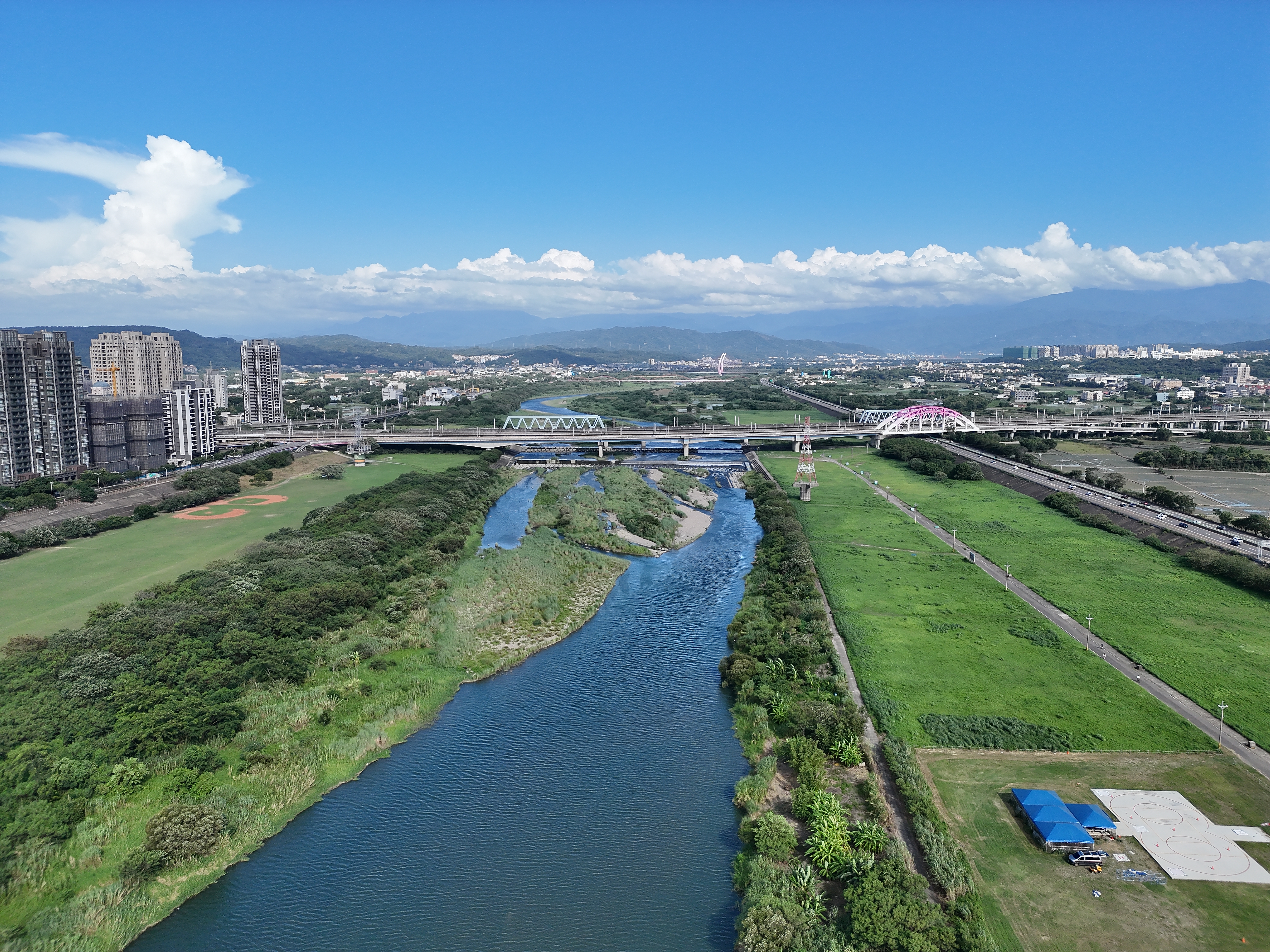
The Touqian River is an important water resource for the Hsinchu region and connects communities, industries, and natural ecosystems.
Land use, domestic wastewater, industrial activities, and waste disposal throughout the watershed may affect downstream water quality and aquatic environments.
Effective watershed governance therefore requires cooperation across administrative boundaries, academic disciplines, government agencies, industries, and local communities.
In 2025, NTHU implemented the Ministry of Education-funded University Social Responsibility (USR) project Deep Integration of Technology and Communities: Protecting the Touqian River through Evidence-Based Research and Environmental Literacy Education.
The project was led by Professor Hsiu-Chuan Chou of the Institute of Analytical and Environmental Sciences, together with Chair Professor Ruey-An Doong, Distinguished Professor Nen-Fu Huang, Professor Shun-Chi Wu, and interdisciplinary research and community engagement teams.
The project integrates rapid water quality testing, sediment contamination and biological toxicity assessments, AI-based river litter detection, environmental education, and watershed governance.
Through a cycle of monitoring, analysis, action, and feedback, NTHU seeks to translate academic knowledge into practical support for off-campus water conservation and community environmental action.
Supporting Evidence:
2025 Touqian River Research and Community Engagement Project Report
NTHU's Touqian River Sustainability Hub report, June 5, 2025. An official publication link should be included when available.
2. Scientific Monitoring: Identifying River Pollution and Environmental Risks
In 2025, NTHU continued applying environmental science and digital technologies to monitor water conditions in the Touqian River and its tributaries.
The project developed complementary approaches covering water quality, sediment contamination, biological toxicity, and visible river litter.
These activities provide scientific information to support pollution prevention and watershed management.
2.1 Rapid Water Quality Testing and Sediment Pollution Assessment
Professor Hsiu-Chuan Chou's research team developed a sediment contaminant and biological toxicity monitoring platform in collaboration with Chair Professor Ruey-An Doong's rapid water quality analysis research.
The teams investigated heavy metals and organic contaminants in river sediments and incorporated cell-based toxicity testing to assess potential environmental health risks.
Sediment analysis provides information about pollutants accumulated over time, complementing conventional measurements of water quality at individual sampling times.
Research covered river sections affected by different potential pollution sources, areas surrounding water intakes, and upstream, middle, and downstream sections of the Luliaokeng River.
By comparing surface and deeper sediment samples and interpreting chemical concentrations alongside cellular responses, researchers identified areas that may require further investigation.
The teams also developed rapid water quality analysis technologies addressing parameters including ammonia nitrogen (NH₃-N), chemical oxygen demand (COD), and selected heavy metals.
Key results in 2025:
Monitoring indicatorResultWater quality sampling sites8Sampling campaigns15Water quality parameters12Correlation between rapid analysis and laboratory results0.915Sediment investigationsHeavy metals, organic contaminants, and cell-based toxicity
These methods help identify potential pollution hotspots and provide information for future monitoring and pollution-source management.
Cell-based toxicity findings are screening indicators and do not, by themselves, demonstrate damage to wild aquatic populations.
The research has also informed discussions of integrated water and sediment monitoring with relevant public agencies. Such discussions should not be interpreted as confirmation that every proposed monitoring policy has been adopted.
Supporting Evidence:
2025 Touqian River Project Report — Water Quality and Sediment Research
2.2 AI-based River Litter Detection and Smart Environmental Monitoring
In addition to chemical pollution, NTHU addresses visible waste accumulating along riverbanks and waterways.
A research team led by Distinguished Professor Nen-Fu Huang developed AI-based litter detection technologies using fixed monitoring cameras, field photographs, and unmanned aerial vehicle imagery.
The team applied the YOLO11 model to identify and classify different categories of river litter.
Key AI monitoring results in 2025:
IndicatorResultRiver environment images collected77,886Annotated images5,769Litter categories15AI modelYOLO11mAP500.945Precision0.942Recall0.900
Continuous visual monitoring can complement volunteer river patrols, which may be limited by staffing and inspection schedules.
AI-supported image analysis helps researchers document changes in litter distribution and provides a technical foundation for future monitoring and community reporting systems.
Sediment investigations and AI-based litter detection address different environmental concerns: chemical contamination that may be difficult to observe directly, and visible waste that can accumulate along waterways.
Together, they contribute to a more comprehensive approach to watershed monitoring.
The reported AI performance metrics describe the model's detection performance and should not be interpreted as quantities of litter removed or pollution reduced.
Supporting Evidence:
2025 Touqian River Project Report — AI River Litter Monitoring
3. River and Coastal Conservation: Community Patrols, Cleanup Activities, and Estuary Education
The Touqian River Project combines scientific research with community participation and practical environmental activities.
Through river observation, cleanup activities, citizen monitoring, and estuary education, NTHU works with community organizations and residents to raise awareness of aquatic conservation.
3.1 Community River Patrols and Citizen Engagement
NTHU supports local environmental groups and river patrol volunteers through monitoring technologies, environmental analysis, and information sharing.
These efforts connect scientific findings with residents' observations of changes in river conditions.
According to the 2025 USR project report, the project recorded 327 community participant attendances and worked with five government, public-sector, or nongovernmental partner organizations.
Activities included guided river walks, community forums, environmental observations, monitoring activities, and local exchanges.
Local residents contribute environmental knowledge and observations, while NTHU provides scientific expertise, student engagement, data analysis, and educational support.
This approach helps build a foundation for shared responsibility in watershed conservation.
3.2 Touqian River Crossing and Estuary Field Visit, September 2025
In September 2025, NTHU's Design Thinking for Sustainable Environmental Governance course collaborated with local river conservation groups to organize a Touqian River crossing and estuary field visit.
Participants observed the river mouth near Nanliao Fishing Port and visited Wanchang Shipyard to learn about local fishing port history and traditional shipbuilding.
They subsequently entered the river from Jiugang Island with local guides and appropriate safety equipment.
During the visit, students observed river currents, sediment, intertidal areas, and estuary organisms, including fiddler crabs.
Their reflections also considered how residential drainage, transportation infrastructure, and land development influence riverbank environments.
The programme combined direct environmental experience, local historical interpretation, and guided reflection.
Community river advocates shared their experiences of river protection, educational activities, and cultural practices associated with Jiugang Island.
The activity helped students understand relationships among river resilience, seasonal water flows, sedimentation, community livelihoods, and aquatic ecosystem conservation.
It provides a documented example of NTHU organizing an educational activity promoting the conservation and sustainable use of river and estuary resources.
Supporting Evidence:
2025 Touqian River Educational Activities and Annual Report
Activity documentation: NTHU General Education Course — Touqian River Crossing, September 23, 2025, involving Professor Hsiu-Chuan Chou and Assistant Researcher Chun-Ming Chen.
Actual photographs and student reflections from the activity should be included.
Relevant Indicators: 14.3.1 and 14.5.4.
3.3 Jiugang Island Coastal Cleanup and Volunteer Training, 2024
In 2024, the NTHU Touqian River Project Team conducted a coastal cleanup and sustainability training activity in the Jiugang Island area along the Hsinchu coast.
The programme introduced Ocean Conservancy's International Coastal Cleanup initiative and its standardized methods for recording collected waste.
Participants used recording forms to document litter types and quantities.
According to the activity record, participants removed nearly 20 kilograms of litter in approximately 20 minutes.
The activity demonstrated the presence of plastic and other waste in coastal environments and helped participants understand connections between river pollution and downstream coastal conditions.
This activity is identified as a 2024 historical example and is not included in the project's 2025 activity totals.
Using International Coastal Cleanup recording methods does not establish that Ocean Conservancy directly organized or co-hosted the event.
Supporting Evidence:
NTHU Touqian River Project Team, Jiugang Island Coastal Cleanup and Sustainability Training Activity, 2024.
Recommended documentation: Original event photographs, the exact event date, waste classification records, and completed International Coastal Cleanup forms.
Relevant Indicators: 14.3.1 and 6.5.2, as historical supporting evidence.
4. University–Government–Community Cooperation for Water Security
The Touqian River is an important source of domestic and industrial water for the Hsinchu region.
Its water quality is closely connected to public health, ecosystem conservation, and regional sustainable development.
Because the watershed crosses administrative jurisdictions and involves land use, pollution control, water supply, and industrial development, water security requires cooperation among public authorities, universities, industries, and communities.
NTHU integrates scientific research, government monitoring data, policy consultation, and community participation to support regional water security.
4.1 Cross-sectoral Watershed Governance Partnerships
NTHU established the Water-Clear Tsing Hua: Environmental Science and Sustainable Watershed Living Network Sustainability Hub to connect environmental research, community engagement, and watershed governance.
The initiative involves cooperation and engagement with government and civil society partners, including the National Science and Technology Council, Water Resources Agency, Ministry of Environment, and Society of Wilderness.
NTHU also works with the Second River Management Branch of the Water Resources Agency, Hsinchu local governments, and environmental organizations.
These partnerships support research exchanges, monitoring data analysis, environmental education, and discussion of watershed protection.
The university has also participated in collaborative initiatives, including the Touqian River Watershed Action Declaration, to strengthen engagement among public authorities, industries, researchers, and community groups.
4.2 Integrating Two Decades of Government Water Quality Data
In 2025, NTHU researchers examined long-term water quality trends using existing government monitoring datasets.
The team compiled monthly water quality records from eight monitoring stations in the Touqian River watershed covering 2005–2024.
It also incorporated 2024 data from three automated water quality monitoring stations operated by the Hsinchu City Environmental Protection Bureau, together with hourly rainfall information from the Central Weather Administration.
The study compared monthly sampling records with automated measurements collected at five-minute intervals to examine how monitoring frequency affects the interpretation of water quality changes.
Researchers found that high-frequency observations could reveal short-term fluctuations that may be obscured by monthly or longer-term summaries.
The analysis also identified a strong correlation between suspended solids and the River Pollution Index (RPI), with a reported correlation coefficient of 0.93.
By combining historical government datasets, automated monitoring, and meteorological information, NTHU contributes analytical evidence that can support pollution monitoring and water security planning.
Supporting Evidence:
2025 Touqian River Project Report — Government Monitoring Data Integration
4.3 Cross-sectoral Research and Education Forum, June 5, 2025
On June 5, 2025, NTHU organized the Greater Hsinchu Watershed Schools Action Alliance Forum.
The forum brought together government representatives, educators, researchers, and community partners to exchange findings and experiences related to watershed conservation.
Discussions addressed water quality monitoring, sediment contamination, environmental education, and the potential value of biological toxicity assessment and high-frequency water quality data.
The event provided opportunities to connect university research with public-sector environmental management needs.
4.4 Government Expert Consultation, September 23, 2025
On September 23, 2025, Professor Hsiu-Chuan Chou's team participated in an expert consultation requested by a government audit authority concerning water pollution prevention in the Hsinchu region.
Participants included Professor Chou, Assistant Professor Chun-Ming Chen, representatives of the Taiwan Clean Water Action Alliance, and research team members.
The consultation addressed water pollution control, monitoring systems, and cross-jurisdictional watershed governance.
Major recommendations included:
- Expanding high-frequency monitoring: Increasing the use of minute-level data and rapid anomaly detection to identify short-term pollution events.
- Broadening pollution parameters: Including heavy metals, plasticizers, PFAS, sediment contamination, and biological toxicity risks.
- Strengthening water intake protection: Evaluating buffer storage, rapid testing, and early-warning systems near critical water intakes.
- Improving pollution-source identification: Integrating monitoring data and pollution-source records across agencies.
- Enhancing cross-jurisdictional governance: Strengthening coordination across upstream and downstream areas and administrative boundaries.
The recommendations provided technical input for government review and future policy discussions.
They should not be interpreted as evidence that every proposed measure has been implemented.
Supporting Evidence:
September 23, 2025 Government Water Pollution Prevention Expert Consultation
4.5 Policy Dialogue and Long-term Watershed Governance
NTHU also participated in initiatives such as River as Before and the development of the Touqian River governance white paper, The Weight of a Thousand Mouthfuls of Water.
Discussions addressed incorporating sediment toxicity into environmental management, monitoring emerging contaminants such as PFAS, and exploring dedicated wastewater discharge infrastructure.
According to the 2025 USR project report, the project organized four cross-sectoral policy consultation meetings and received formal responses from government bodies concerning relevant proposals.
These outcomes demonstrate research-informed dialogue and engagement with public authorities.
However, formal government responses and policy discussions do not necessarily indicate that all proposals have been adopted or implemented.
NTHU aims to continue supporting data sharing, pollution risk assessment, and cross-jurisdictional watershed governance.
Supporting Evidence:
2025 Touqian River Project Report — Policy Consultation and Partnerships
5. Local Cultural Heritage, Ecological Interpretation and Watershed Education
The Touqian River Project recognizes the connections among natural ecosystems, cultural heritage, local settlements, and water-resource use.
In 2025, related university–industry cooperation focused on the development of cultural and ecological interpretation resources.
Activities included community interviews, local historical investigations, oral histories, and guided field visits.
Knowledge contributed by village leaders, river patrol volunteers, and local residents was incorporated into educational resources.
Through activities in Zhudong and surrounding watershed communities, the project connected residents' experiences of environmental change with discussions of local industries, river ecology, and water-resource protection.
Watershed Schools and Youth Engagement
In 2025, NTHU established the Greater Hsinchu Watershed Schools Action Alliance under the concept of One School, One Stream.
The alliance connected five high schools:
- Hsinchu Senior High School.
- Hsinchu Girls' Senior High School.
- National Experimental High School at Hsinchu Science Park.
- Keyuan Senior High School.
- NTHU Affiliated Senior High School.
Activities combined environmental observation, water sampling, community interviews, and design thinking.
Students were encouraged to investigate real environmental concerns and explore possible actions for watershed conservation and sustainable development.
These educational partnerships helped transform the Touqian River watershed into a shared learning environment for scientific investigation, local cultural heritage, and civic participation.
Supporting Evidence:
2025 Touqian River Project Report — Cultural Heritage and Watershed Education
6. From Research to Practice: Supporting Off-campus Water Conservation
NTHU integrates research, environmental education, and community partnerships to support water conservation beyond its campuses.
Documented achievements in 2025 include:
- Water quality and sediment monitoring: Eight sampling sites, 15 sampling campaigns, 12 water quality parameters, and sediment contamination and biological toxicity assessments.
- AI-based river litter detection: 77,886 collected images, 5,769 annotated images, 15 litter categories, and an mAP50 of 0.945.
- Community environmental participation: 327 participant attendances and cooperation with five public-sector or civil society organizations.
- Policy dialogue and water security: Four cross-sectoral consultation meetings and technical input provided to government agencies.
- Long-term monitoring analysis: Integration of water quality records from eight stations covering 2005–2024 and high-frequency observations from three automated stations in 2024.
- Cultural and environmental education: Community interviews, ecological interpretation, watershed schools, and river field visits.
- Estuary conservation education: A September 2025 river crossing and estuary field visit involving observations of tidal habitats, organisms, and human impacts on river environments.
These activities provide scientific knowledge, monitoring tools, and collaborative support for off-campus water conservation.
Their contributions primarily involve environmental monitoring, risk identification, education, and public engagement.
They do not establish a quantified reduction in watershed pollution loads, improvements in receiving-water quality, or measurable water savings.
7. Youth Design Thinking and Inter-university River Conservation Innovation
In May 2025, NTHU participated in the River as Before design thinking workshop, jointly promoted by Tunghai University, NTHU, and United Daily News.
Students from different universities explored challenges involving river pollution, environmental education, and watershed governance.
The workshop used interdisciplinary teamwork and design thinking to develop potential solutions combining technology, education, and civic participation.
NTHU's Good River Partners team focused on the Touqian River and explored how digital platforms, information sharing, and community interaction could improve public engagement with water-related issues.
In January 2026, the team won first place in the inaugural River as Before competition finals.
Its proposal featured a LINE chatbot intended to connect river information with community participation.
The achievement illustrates how student innovation and problem-based learning can support environmental education and public engagement.
The award-winning proposal should not be interpreted as evidence that the chatbot has already been fully deployed or evaluated in operational use.
Supporting Evidence:
River as Before Design Thinking Workshop, 2025
Good River Partners Competition Result, January 2026
8. One University, One River: Inter-university Watershed Education Collaboration
In October 2025, NTHU participated in the One University, One River inter-university exchange.
The event brought together universities to share experiences in river conservation, water-related environmental education, and community engagement.
Through cross-university dialogue, participants compared environmental challenges across different watersheds and exchanged approaches involving scientific research, community participation, and educational activities.
The initiative connected environmental research, youth engagement, and university social responsibility while supporting wider collaboration on watershed conservation.
Supporting Evidence:
One University, One River — Inter-university Exchange, October 31, 2025
9. Continuing Commitment to Integrated Watershed Conservation
The Touqian River Project demonstrates how NTHU combines scientific monitoring, environmental risk assessment, water security cooperation, estuary education, and community partnerships.
For Indicator 6.5.2, NTHU supports off-campus water conservation through water quality analysis, sediment investigations, AI litter detection, and cooperation with river conservation groups.
For Indicator 6.5.4, the university contributes to water security through government monitoring data integration, cross-sectoral policy consultation, and expert advice on pollution prevention and watershed governance.
For Indicator 14.3.1, the university supports events promoting the conservation and sustainable use of aquatic environments, including the documented September 2025 estuary field visit and the separately identified 2024 Jiugang Island coastal cleanup.
NTHU seeks to continue strengthening scientific monitoring and environmental risk identification while deepening cooperation with government authorities, local communities, schools, and civil society organizations.
By connecting academic research with community engagement and public governance, the university aims to support the long-term protection and sustainable use of water resources and aquatic ecosystems throughout the Touqian River watershed.