
Policy on Preventing and Reducing Marine Pollution of All Kinds, in Particular from Land-Based Activities
Sustainable Development Goals
Content
National Tsing Hua University Policy and Management Measures for Preventing and Reducing Marine Pollution
THE Impact Rankings 14.4.3 — Reducing Marine Pollution (Policy)
Relevant Sustainable Development Goals: SDG 14 — Life Below Water; SDG 6 — Clean Water and Sanitation; SDG 12 — Responsible Consumption and Production
1. Policy Objectives
National Tsing Hua University (NTHU) supports United Nations Sustainable Development Goal (SDG) 14.1, which calls for preventing and significantly reducing marine pollution of all kinds, particularly pollution resulting from land-based activities.
The university recognizes that campus operations may affect rivers, lakes, coastal waters, and marine environments. It therefore implements measures for pollution prevention at source, wastewater treatment, waste reduction, and resource recycling.
NTHU acknowledges that land-based pollutants may enter downstream aquatic environments through drainage systems, surface runoff, and rivers. Accordingly, water pollution prevention and waste management are important components of campus environmental management.
Through regulatory compliance, pollution prevention, environmental management, education, and continuous improvement, NTHU seeks to reduce environmental risks associated with campus operations and protect aquatic ecosystems and environmental quality.
The university also discloses its environmental management measures and implementation outcomes through its sustainability website and annual sustainability reports, promoting transparency and institutional accountability.
Supporting Evidence:
National Tsing Hua University Policy on Preventing and Reducing Marine Pollution
NTHU Environmental Protection and Occupational Safety and Health Management Policy
2. Scope of Policy and Management
NTHU's measures for preventing and reducing land-based water pollution cover the following areas:
- Domestic Wastewater Management: Collection, treatment, discharge, and facility management of domestic wastewater generated on campus.
- Laboratory Wastewater and Liquid Waste Management: Management of laboratory washing wastewater, waste chemicals, hazardous industrial waste, and other pollutants requiring specialized treatment.
- General Waste Management and Recycling: Classification, collection, and transportation of municipal waste, plastics, metals, glass, paper, food waste, and other recyclable materials.
- Pollution Management in Catering and Construction Activities: Management of waste, oil, grease, and potential pollution risks associated with campus food services, cleaning, construction, maintenance, and other operations.
- Campus Drainage and Environmental Protection: Management of wastewater discharge, stormwater drainage, and other pollution sources that may affect surrounding aquatic environments, according to applicable regulations and infrastructure conditions.
- Environmental Education and Pollution Prevention Awareness: Environmental education, laboratory safety training, campus plastic reduction initiatives, and sustainability activities to strengthen awareness of pollution prevention and water-resource protection among students, faculty, and staff.
These responsibilities are carried out by designated university units in accordance with applicable laws, infrastructure conditions, and established management procedures.
3. Pollution Prevention at Source and Wastewater Classification
3.1 Domestic Wastewater Management
NTHU manages domestic wastewater generated on campus through existing collection and treatment facilities, in accordance with applicable environmental regulations and the drainage conditions of individual campuses.
According to the university's existing wastewater management documentation, wastewater treatment and discharge arrangements differ between the Main Campus and Nanda Campus:
- Main Campus: Domestic wastewater undergoes collection and preliminary treatment before entering the Hsinchu City municipal sewerage system for further treatment.
- Nanda Campus: Domestic wastewater is treated through campus wastewater treatment facilities before being discharged into Keya Creek in accordance with applicable discharge requirements.
Through wastewater collection, treatment, and facility management, NTHU seeks to reduce the risk of untreated domestic wastewater entering natural water bodies.
Actual wastewater treatment processes and discharge destinations are managed according to campus infrastructure, applicable regulations, and the requirements approved by relevant authorities.
Supporting Evidence:
NTHU Campus Wastewater Management
2026 NTHU Sustainable Development Annual Report, sections concerning campus water-resource management.
3.2 Laboratory Washing Wastewater Management
NTHU has established the Regulations Governing Wastewater Management in Laboratory Facilities, which specify requirements for wastewater discharge, supervision, sampling, and treatment in laboratory facilities.
According to existing university records, NTHU operates northern and southern laboratory wastewater treatment facilities to collect and treat laboratory washing wastewater.
Laboratories are required to manage wastewater according to its characteristics to prevent chemicals and other pollutants from entering campus wastewater treatment systems improperly.
Under Article 7 of the Regulations Governing Wastewater Management in Laboratory Facilities, wastewater entering the treatment plants must comply with the following limits:
Water Quality ParameterInfluent LimitChemical Oxygen Demand (COD)Below 320 mg/LBiochemical Oxygen Demand (BOD)Below 90 mg/LpH6–9
These figures are influent limits for the university's laboratory wastewater treatment plants, not statutory final effluent discharge standards.
Under the regulations, the university's Environmental Protection and Occupational Safety and Health Center may conduct unannounced and irregular wastewater monitoring.
Where necessary, qualified testing organizations may be commissioned to collect and analyze samples.
The management procedures also provide for investigating abnormal wastewater conditions in collection wells and laboratory drainage pipelines.
Laboratories exceeding prescribed limits or violating wastewater management requirements are subject to corrective measures and procedures established under the regulations.
Through defined influent limits, monitoring, and management responsibilities, NTHU seeks to minimize the potential impacts of laboratory wastewater on treatment facilities and surrounding aquatic environments.
Supporting Evidence:
NTHU Regulations Governing Wastewater Management in Laboratory Facilities
The regulations were drafted by the Environmental Protection and Safety Committee on September 29, 2009, and amended and approved by the Administrative Council on October 13, 2009.
NTHU Campus Wastewater Management
3.3 Laboratory Liquid Waste and Hazardous Industrial Waste Management
NTHU manages laboratory liquid waste, waste chemicals, and hazardous industrial waste in accordance with Taiwan's Waste Disposal Act and other applicable regulations.
Under the university's laboratory wastewater management regulations, laboratory washing wastewater and chemical liquid waste must be managed separately.
Chemical liquid waste must be collected in designated waste containers and must not be disposed of through laboratory sinks or drainage systems.
According to the 2026 NTHU Sustainable Development Annual Report, the university has implemented laboratory waste management measures including:
- Operation of university-level temporary storage facilities for laboratory waste.
- Identification cards for the collection and transportation of hazardous industrial waste from laboratories.
- Collection and management of waste chemicals.
- Regulations governing laboratory waste management.
- Relevant environmental safety education and training.
Liquid waste and hazardous industrial waste requiring external treatment are classified, stored, collected, and processed through qualified contractors in accordance with applicable laws and university procedures.
Through waste classification, temporary storage, collection, and education, NTHU seeks to reduce the risk of chemical waste entering campus drainage systems and natural water bodies.
Supporting Evidence:
NTHU Regulations Governing Wastewater Management in Laboratory Facilities
2026 NTHU Sustainable Development Annual Report, sections on Waste Reduction and Management and Laboratory Waste Management.
4. General Waste Reduction, Campus Plastic Reduction and Recycling
4.1 Reducing Single-use Plastics on Campus
NTHU supports government policies on plastic reduction at source by encouraging campus dining facilities and stores to reduce the use of disposable plastic products.
According to previous institutional environmental management submissions, relevant measures have been implemented since January 1, 2020, including:
- Restricting the free distribution of plastic bags by campus restaurants and stores in accordance with applicable regulations.
- Encouraging students, faculty, and staff to bring reusable tableware and shopping bags.
- Providing reusable bowls and plates at campus dining facilities.
- Restricting the provision of disposable tableware, plastic bags, and plastic straws in accordance with applicable requirements.
By reducing the use of disposable plastic products, NTHU seeks to minimize plastic waste generation and improper disposal.
These measures also help reduce the risk of land-based plastic waste entering coastal and marine environments through campus drainage systems, rivers, and other environmental pathways.
Supporting Evidence:
NTHU Campus Plastic Reduction and Environmental Protection Measures
NTHU Policy on Preventing and Reducing Marine Pollution
4.2 Scheduled Waste Collection and Prevention of Littering
NTHU continues implementing its campus waste management approach to reduce the temporary accumulation and improper disposal of waste in open campus spaces.
According to the 2026 NTHU Sustainable Development Annual Report, the university has removed temporary waste storage facilities from open campus areas.
It operates waste collection services at designated locations and scheduled times, together with waste segregation and recycling measures.
Centralized waste collection and classification help reduce the risks of littering, waste accumulation, and improper disposal.
These measures also help prevent land-based campus waste from potentially reaching downstream water environments through drainage systems and natural pathways.
4.3 Recycling and Waste Classification
NTHU maintains measures for the classification, collection, and management of recyclable resources generated on campus.
According to the 2026 Annual Report, materials covered by campus recycling management include:
- Paper, plastics, glass, and metals.
- Recyclable containers.
- Food waste and used cooking oil.
- Plant materials.
- Electrical and electronic products and laboratory equipment.
- Furniture, scrap metal, and other recyclable materials.
Recyclable materials are collected and processed with the assistance of contractors engaged by the university.
Large waste items are managed through designated collection arrangements.
Through recycling, proper classification, and appropriate processing, NTHU seeks to reduce the environmental impacts of improper waste disposal while promoting resource circularity.
Supporting Evidence:
2026 NTHU Sustainable Development Annual Report, sections on Waste Reduction and Management and Recycling Management.
Supporting photographs of waste segregation, recycling collection, and laboratory waste management are recommended.
5. Drainage Management and Prevention of Land-based Pollution
NTHU recognizes the importance of campus drainage and surface environmental management in reducing the risk of pollutants entering surrounding aquatic environments.
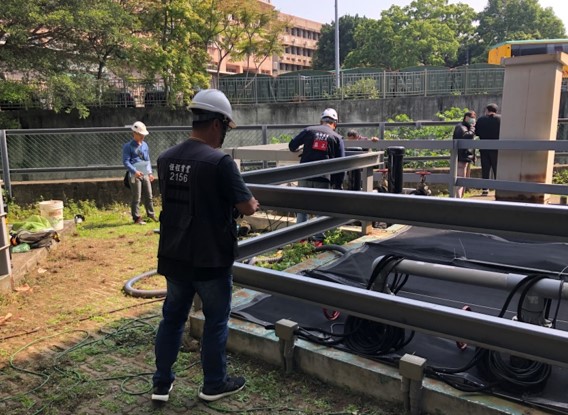
Existing university wastewater management records document the management of separate stormwater and wastewater drainage systems and the involvement of professional contractors in maintaining relevant wastewater treatment facilities.
Campus operations and construction activities involving drainage, waste, oil, or grease are managed in accordance with applicable regulations, campus facility requirements, and environmental protection measures.
For stormwater discharge, wastewater collection, construction earthworks, and other potentially polluting activities, the university implements management procedures through its responsible administrative units to reduce the risks of improper discharge and waste dispersal.
Excavated soil from campus construction projects is managed according to university requirements, including designated temporary storage areas and the exchange or reuse of excavated materials within construction projects.
The availability and coverage of separate drainage systems, sedimentation facilities, and oil-water separation equipment depend on the infrastructure of individual campuses.
NTHU does not assume that identical facilities are installed across all campuses without supporting engineering documentation and management records.
Supporting Evidence:
NTHU Campus Wastewater Management
2026 NTHU Sustainable Development Annual Report, information concerning campus waste management and construction earthworks.
Additional recommended documentation includes campus drainage plans, sedimentation facilities, oil-water separation equipment, and construction environmental management records.
6. Regulatory Compliance, Monitoring and Pollution Incident Response
NTHU implements campus wastewater management, laboratory waste management, and pollution prevention in accordance with Taiwan's Water Pollution Control Act, Waste Disposal Act, and other applicable environmental regulations.
Where statutory effluent monitoring, wastewater discharge reporting, or industrial waste reporting is required, the responsible administrative units carry out these activities according to applicable procedures.
6.1 Laboratory Wastewater Monitoring
Under the NTHU Regulations Governing Wastewater Management in Laboratory Facilities, the Environmental Protection and Occupational Safety and Health Center may conduct irregular and unannounced wastewater sampling and testing.
When monitoring identifies abnormal conditions or exceedances of prescribed limits, the university requires the responsible laboratories and supervisory units to take corrective measures according to established procedures.
The regulations also provide for addressing violations.
These measures establish a framework for pollution prevention, wastewater monitoring, and corrective action.
6.2 Maintenance of Wastewater Treatment Facilities
According to the university's existing wastewater management documentation, professional contractors are engaged to carry out routine maintenance of wastewater treatment facilities.
These arrangements support the proper operation and treatment functions of campus facilities.
Statutory effluent testing and reporting are conducted according to applicable discharge requirements at each campus.
6.3 Response to Pollution Incidents
In cases involving abnormal discharge, chemical spills, or other incidents that may cause environmental contamination, appropriate actions are taken according to university emergency response procedures.
Relevant regulatory authorities are notified when required by applicable laws.
Monitoring, corrective action, and reporting records are maintained by designated units and disclosed according to applicable information disclosure requirements.
Supporting Evidence:
NTHU Regulations Governing Wastewater Management in Laboratory Facilities
Taiwan Ministry of Environment — Water Pollution Control Information Platform
Additional recommended documentation includes actual NTHU effluent monitoring reports, water pollution control permits, wastewater treatment facility maintenance records, and regulatory reporting records.
7. Environmental Education and Pollution Prevention Awareness
In addition to pollution prevention at source and regulatory compliance, NTHU promotes environmental education and awareness among students, faculty, and staff.
Relevant educational topics include waste segregation, recycling, laboratory waste management, pollution prevention, and sustainable water-resource use.
Through campus sustainability education and off-campus watershed engagement, the university also encourages students and local communities to understand aquatic environmental challenges.
For example, through the Touqian River University Social Responsibility (USR) Project, NTHU conducts research on river water quality, sediment contamination, waste monitoring, environmental education, and community collaboration.
These activities extend discussions of water pollution prevention beyond campus operations into broader environmental and community contexts.
Such off-campus activities serve as supplementary examples of the university's commitment to environmental protection.
However, they are not presented as substitutes for its campus pollution prevention policies and management systems.
Supporting Evidence:
2026 NTHU Sustainable Development Annual Report.
2025 Touqian River Research and Community Engagement Project Report
Related NTHU sustainability evidence webpage: Touqian River Sustainable Watershed Living Network.
8. Information Disclosure and Environmental Management Outcomes
NTHU discloses information concerning campus environmental management and sustainability initiatives through its Sustainable Development Annual Report and sustainability website.
The 2026 NTHU Sustainable Development Annual Report documents measures related to campus water-resource management, waste reduction, recycling, and laboratory waste management.
These disclosures allow the public to understand the university's ongoing environmental management activities.
NTHU also publishes information on campus wastewater management, laboratory wastewater regulations, and land-based pollution prevention through its sustainability website.
Information concerning water pollution prevention and waste management that is subject to statutory disclosure requirements is handled according to applicable laws and regulatory information disclosure procedures.
The university may further strengthen transparency by consolidating information on wastewater treatment, monitoring results, corrective measures, and pollution incident management.
Supporting Evidence:
2026 NTHU Sustainable Development Annual Report.
NTHU Campus Wastewater Management
NTHU Policy on Preventing and Reducing Marine Pollution
9. Responsible Administrative Units
Campus pollution prevention and environmental management are implemented through cooperation among relevant university units in accordance with their respective responsibilities.
Primary Responsible Unit: Environmental Protection and Occupational Safety and Health Center
The Center manages relevant matters concerning wastewater, laboratory environmental safety, waste classification and collection, and pollution prevention within its designated responsibilities.
Supporting Units: Office of General Affairs and Relevant Divisions
These units manage campus facilities, drainage systems, construction activities, and related environmental matters according to their administrative responsibilities.
Implementing Units: Colleges, Research Units and Laboratories
Academic and research units implement applicable pollution prevention measures, including laboratory wastewater classification, chemical liquid waste collection, and other environmental protection practices.
Specific responsibilities are determined by the university's organizational structure and applicable management regulations.
10. Continuous Improvement and Policy Review
NTHU continues reviewing pollution prevention and waste management measures in response to environmental regulations, operational needs, and sustainable development objectives.
The university's existing publicly available Policy on Preventing and Reducing Marine Pollution states that the policy should generally be reviewed and updated every three years, with additional revisions where necessary in response to regulatory changes or campus conditions.
The implementation and documentation of such reviews should be supported by officially approved university records, meeting minutes, and policy revision documents.
NTHU will continue strengthening pollution prevention at source, wastewater classification and treatment, campus plastic reduction, recycling, environmental education, and information disclosure.
The university will also integrate its educational and research expertise to improve campus pollution prevention and reduce the potential environmental impacts of land-based pollution on rivers, coastal waters, and marine ecosystems.
Policy Establishment and Review Records
This webpage consolidates NTHU's existing environmental management regulations, publicly available marine pollution prevention policy, and relevant information from the 2026 NTHU Sustainable Development Annual Report.
Verified Institutional Regulation
National Tsing Hua University Regulations Governing Wastewater Management in Laboratory Facilities
- September 29, 2009: Drafted by the Environmental Protection and Safety Committee.
- October 13, 2009: Amended and approved by the Administrative Council.
- Scope: Laboratory washing wastewater management, wastewater treatment plant influent limits, irregular monitoring, and procedures for addressing violations.
Review Principle Stated in the Existing Public Policy
The university's published Policy on Preventing and Reducing Marine Pollution specifies a three-year review and revision principle.