
National Tsing Hua University Water Reuse Policy
Sustainable Development Goals
Content
6.4.1 / 6.4.2 / 6.5.3
In line with the University’s Environmental Protection and Occupational Safety and Health Management Policy, National Tsing Hua University (NTHU) is committed to building a sustainable and environmentally responsible campus. The University continuously promotes energy conservation and resource circularity to reduce freshwater consumption, enhance water reuse efficiency, and strengthen long-term sustainable water management in response to climate change and regional water challenges in Taiwan.
1.Policy Objective
In line with the University’s Environmental Protection and Occupational Safety and Health Management Policy, National Tsing Hua University (NTHU) is committed to building a sustainable and environmentally responsible campus. The University continuously promotes energy conservation and resource circularity to reduce freshwater consumption, enhance water reuse efficiency, and strengthen long-term sustainable water management in response to climate change and regional water challenges in Taiwan.
2.Policy Principles
· Sustainability Governance
A cross-departmental governance mechanism, led by the Energy Conservation Task Force, shall review water use and reuse performance on a regular basis.
· Source Reduction
All campus facilities conduct regular inspections of water tanks and supply systems to prevent leakage and ensure the operation of water-saving devices.
· Reuse Priority
Reclaimed water from swimming pools, rainwater harvesting systems, and open water bodies shall be prioritized for landscape irrigation and ecological pond replenishment.
· Green Procurement
Procurement of products and devices with eco-labels and water-saving certifications shall be prioritized.
· Education and Awareness
Water conservation campaigns and educational programs shall be continuously promoted to engage faculty, staff, and students.
3.Implementation Measures
· Swimming Pool Water Reuse
Recycled pool water is used for track field irrigation at the main campus and ecological pond replenishment at the Nanda campus, totaling approximately 1,044 tons annually.
· Rainwater and Open Water Reuse
All post-2000 buildings certified as green buildings reuse rooftop rainwater for irrigation and toilet flushing; open water sources such as Chenggong Lake support approximately 24 tons of landscape irrigation annually.
· Water-Saving Infrastructure
All campus facilities are equipped with water-saving faucets and automatic shut-off devices to minimize waste.
· Energy and Water Management Meetings
Annual meetings of the Energy Conservation Task Force review progress on energy efficiency and water reuse.
· Landscape and Ecological Stewardship
The Campus Landscape and Environmental Review Committee ensures ecological harmony in construction and irrigation planning based on local topography and groundwater conditions.
4. Sustainable Water Extraction and Alternative Water Source Management
National Tsing Hua University (NTHU) primarily obtains its daily water supply from the Taiwan Water Corporation rather than directly extracting water from rivers, lakes, or aquifers. To reduce dependence on municipal freshwater supplies, the university promotes sustainable water management through water reuse, rainwater management, and the responsible use of existing campus water bodies.
### 4.1 Minimizing Direct Extraction from Natural Water Sources
NTHU relies primarily on the public water supply system to meet campus water demands. The university regularly monitors water consumption in campus buildings, inspects water supply facilities, checks for abnormal leakage, and promotes water conservation.
By implementing water reuse and water-saving measures, NTHU seeks to reduce unnecessary freshwater consumption rather than increase direct extraction from natural water sources.
### 4.2 Reuse of Swimming Pool Discharge Water
NTHU reuses discharged swimming pool water for landscape irrigation and ecological maintenance.
At the main campus, discharged pool water is reused to irrigate athletic fields and lawns. At the Nanda Campus, discharged swimming pool water is directed to ecological ponds.
Based on previous estimates, approximately 87 tonnes of swimming pool water are reused each month, equivalent to 1,044 tonnes annually.
This practice reduces the demand for additional freshwater in landscape maintenance by making productive use of existing water resources.
### 4.3 Rainwater Management and Use of Campus Water Bodies
NTHU takes advantage of its natural topography and existing waterways to collect and retain rainwater through campus channels and lakes.
This system allows natural rainfall to support vegetation growth and contributes to groundwater recharge.
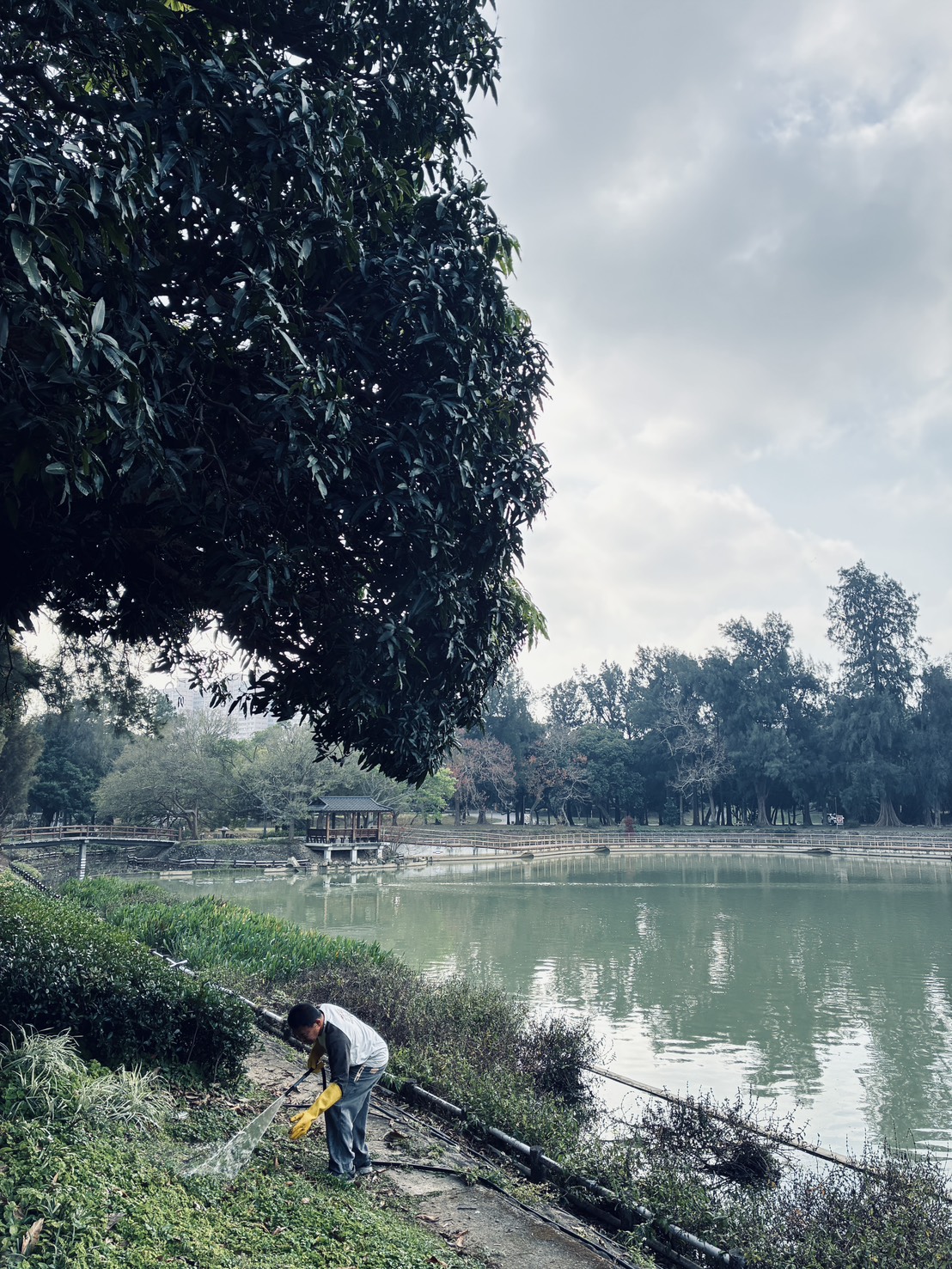
For landscape maintenance around Plum Garden and Cheng Kung Lake, the university also makes limited use of nearby campus water bodies as alternative irrigation sources.
Previous estimates indicate approximately 2 tonnes of water used monthly for this purpose, equivalent to 24 tonnes annually.
The university distinguishes the use of these alternative surface water sources from recycled swimming pool water to ensure that different water management practices are reported accurately.
### 4.4 Ecological Conservation and Sustainable Landscape Management
NTHU's Campus Landscape and Environmental Review Committee reviews matters related to campus topography, vegetation, ecological conditions, and landscape development to promote compatibility between construction activities and environmental conservation.
Campus vegetation also benefits from natural rainfall and existing environmental conditions, reducing the need for unnecessary artificial irrigation.
By integrating natural water cycles into landscape management, NTHU aims to conserve water resources while maintaining campus biodiversity and ecological quality.
The university will continue strengthening water consumption monitoring, improving water-saving facilities, and promoting responsible alternative water use to support sustainable campus water management and reduce additional demand on natural water resources.
5.Policy Outcomes
- Over 1,000 tons of reclaimed water reused annually.
- All new buildings certified under green building standards.
- Comprehensive water-saving infrastructure implemented campus-wide.
- Ongoing education and advocacy programs strengthen environmental awareness among the campus community.
6.Continuous Improvement and Monitoring
NTHU will continuously monitor water reuse performance through a smart water management system, enhance data governance and decision-making support, and regularly disclose progress through the University’s annual sustainability report to ensure transparency and accountability.