
Research on Water Pollution Prevention and Aquatic Ecosystem Protection: Emerging Contaminant Removal, Green Water Treatment and Resource Recovery
Sustainable Development Goals
Content
NTHU Research on Water Pollution Prevention and Aquatic Ecosystem Protection: Emerging Contaminant Removal, Green Water Treatment and Resource Recovery
THE Impact Rankings 14.3.4 — Technologies Towards Aquatic Ecosystem Damage Prevention (Direct Work)
Relevant Sustainable Development Goals: SDG 14 — Life Below Water; SDG 6 — Clean Water and Sanitation; SDG 12 — Responsible Consumption and Production
1. Research Commitment: Protecting Aquatic Ecosystems through Pollution Prevention and Green Technologies
National Tsing Hua University (NTHU) promotes research on water pollution prevention, sustainable water-resource management, and aquatic ecosystem protection.
Through environmental science, chemical processes, and interdisciplinary technological research, the university explores methods to reduce the potential environmental impacts of human activities and industrial wastewater.
Pollutants may enter rivers, lakes, coastal waters, and marine environments through domestic wastewater, industrial discharge, and other land-based sources.
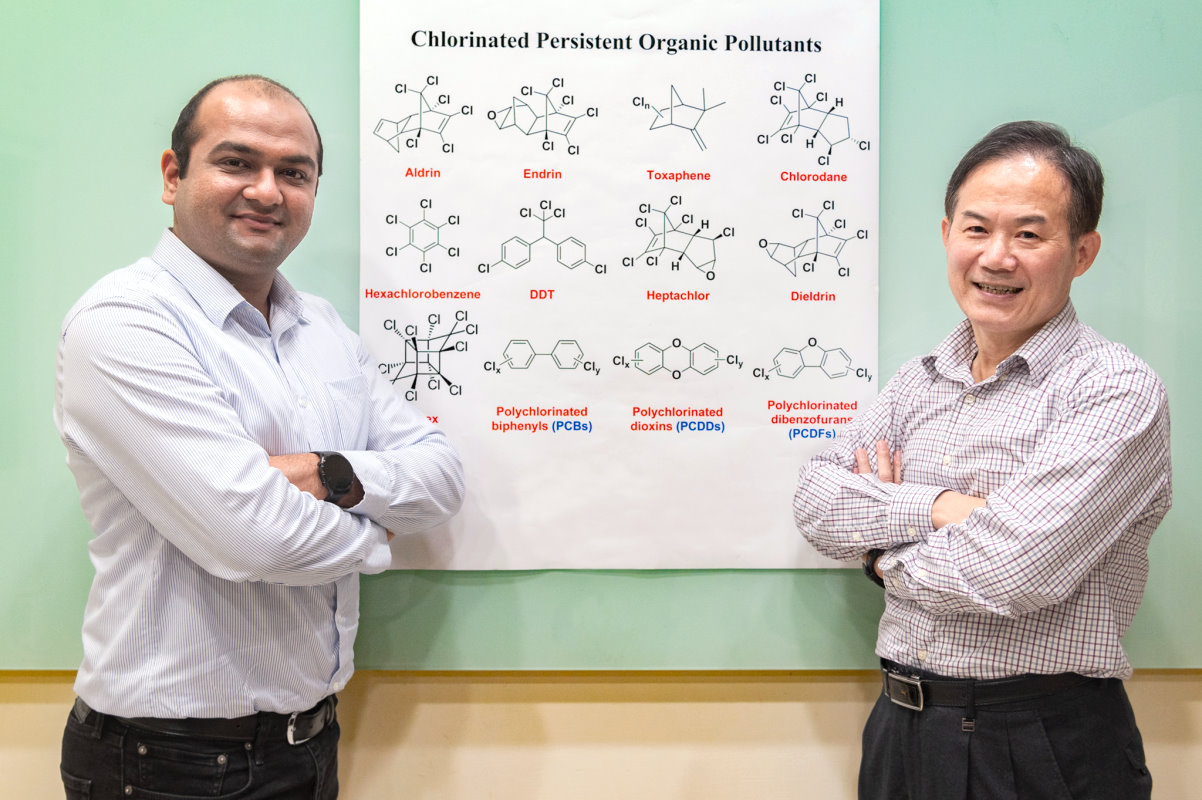
Some emerging contaminants have complex chemical characteristics and may not be adequately removed by conventional water treatment processes. This creates a need for more effective, environmentally sustainable treatment technologies.
Research teams at NTHU's College of Nuclear Science investigate the removal of emerging contaminants and the recovery of water resources.
Their research includes photoelectrochemical systems, Advanced Oxidation Processes (AOPs), Advanced Reduction Processes (ARPs), and solar-driven photothermal distillation.
These research directions share the objective of reducing potential impacts on aquatic environments through contaminant removal, environmental risk assessment, and water-resource recovery.
They also explore opportunities to reduce the energy requirements associated with conventional water treatment.
The work connects SDG 6 on clean water and sanitation, SDG 12 on responsible consumption and production, and SDG 14 on aquatic and marine ecosystem protection.
It provides a research foundation for future pollution prevention and environmental damage reduction technologies.
2. Photoelectrochemical Systems for Emerging Contaminant Removal
2.1 Research on Photoelectrochemical Technologies
NTHU researchers investigate the application of photoelectrochemical systems to water treatment and contaminant removal.
This field combines light-driven processes with electrochemical reactions to explore how pollutants can be transformed or degraded under suitable reaction conditions.
The research addresses the limitations that some conventional treatment processes may face when removing emerging contaminants.
Research objectives include improving treatment efficiency and investigating the underlying chemical processes and potential environmental implications.
2.2 Relevance to Aquatic Ecosystem Protection
Pollutants entering rivers and coastal waters without appropriate treatment may increase exposure risks for aquatic organisms and ecosystems.
Photoelectrochemical research explores additional treatment pathways that could reduce contaminant concentrations or transform pollutants before they enter natural water bodies.
Such approaches may have potential applications in industrial wastewater management, contaminated water treatment, and other settings requiring more advanced pollution control.
However, the information currently available does not provide specific removal efficiencies, treatment capacities, energy consumption data, or results from field-scale testing.
Therefore, these technologies are presented as ongoing research rather than as commercially deployed or fully validated industrial solutions.
Supporting Evidence
Source: NTHU College of Nuclear Science, institutional submission for THE Impact Rankings Indicator 14.3.4.
Recommended documentation includes peer-reviewed publications, experimental equipment photographs, research project reports, and quantitative treatment performance data.
Relevant Indicator: 14.3.4.
3. Advanced Oxidation and Reduction Processes for Water Pollution Control
3.1 Advanced Oxidation Processes
NTHU research teams investigate Advanced Oxidation Processes (AOPs) for the degradation of emerging contaminants in water.
Research focuses on contaminant degradation efficiency, reaction mechanisms, and the potential environmental impacts of treatment products.
AOPs provide an important direction for pollution control research and may support the development of methods to reduce contaminant releases into natural aquatic environments.
3.2 Advanced Reduction Processes
In addition to advanced oxidation, researchers explore Advanced Reduction Processes (ARPs) as alternative chemical pathways for contaminant transformation and degradation.
By examining different treatment mechanisms, the research aims to improve understanding of pollutant behavior and identify potentially effective pollution control approaches.
3.3 Assessing the Environmental Risks of Transformation Products
Effective contaminant treatment requires more than measuring the disappearance of the original pollutant.
Chemical treatment processes may generate transformation products that require further investigation.
NTHU therefore incorporates research on degradation mechanisms and the potential environmental risks of transformation products.
This approach recognizes that reductions in parent contaminant concentrations do not necessarily establish that treated water is environmentally harmless.
Evaluating pollutant removal, chemical transformation, and potential environmental risks together provides a more comprehensive scientific basis for future treatment development.
Supporting Evidence
Source: NTHU College of Nuclear Science, institutional submission for Indicator 14.3.4.
Recommended documentation:
- Research publications on AOPs and ARPs.
- Identification of the emerging contaminants studied.
- Pollutant removal efficiencies and experimental conditions.
- Identification and environmental assessment of transformation products.
- Records of field or industrial testing, where available.
Relevant Indicator: 14.3.4.
4. Solar-driven Photothermal Distillation for Clean Water Recovery
4.1 Solar-powered Water Treatment Research
NTHU researchers also develop solar-driven photothermal distillation technologies to explore the recovery of clean water using solar energy.
The approach uses sunlight to generate heat, facilitating water evaporation and subsequent condensation.
This research explores possibilities for reducing the energy demand associated with conventional water treatment and desalination processes.
It connects water treatment, resource recovery, and renewable energy use in response to sustainability challenges in water and energy management.
4.2 Water Reuse and Environmental Damage Prevention
By recovering clean water and supporting water reuse, solar-driven photothermal distillation may help reduce demand for additional freshwater withdrawals in suitable applications.
With further development and validation, such technologies could complement contaminated water treatment, water reclamation, and other resource recovery systems.
However, their environmental and operational benefits depend on actual water conditions, system design, treatment performance, energy requirements, and maintenance needs.
The currently supplied documentation does not include specific water production rates, energy consumption figures, or verified industrial deployment records.
Accordingly, this initiative is described as technological research with potential applications rather than an established commercial treatment programme.
Supporting Evidence
Source: NTHU College of Nuclear Science, institutional submission for Indicator 14.3.4.
Recommended documentation includes photographs of experimental systems, research publications, distillation performance results, water production data, energy requirements, and water quality measurements.
Relevant Indicator: 14.3.4, with connections to SDGs 6 and 12.
5. Connecting Pollution Control, Water Recovery and Aquatic Ecosystem Protection
NTHU's research activities provide complementary technical approaches to pollution prevention and sustainable water-resource management.
Photoelectrochemical systems and advanced oxidation and reduction processes investigate the removal and chemical transformation of contaminants.
Solar-driven photothermal distillation explores clean water recovery and the use of solar energy in treatment processes.
Although the technologies follow different scientific approaches, they share a potential contribution to reducing aquatic pollution risks and improving resource efficiency.
For rivers, estuaries, and coastal waters, appropriate contaminant treatment can help prevent pollution from entering natural ecosystems.
Such technologies may support future approaches to aquatic ecosystem protection.
Nevertheless, the available research evidence does not establish that these systems have already reduced pollutant loads in a particular river or improved marine biodiversity at a specific location.
Their current contribution is principally in technological development and the scientific understanding of pollution control and water recovery.
6. Potential Applications in Marine-related Industries
THE Impact Rankings Indicator 14.3.4 examines whether universities directly undertake research or work with industries on technologies and practices that enable marine-related industries to minimize or prevent damage to aquatic ecosystems.
NTHU's research on emerging contaminant removal, water recovery, and sustainable treatment technologies has potential relevance to industrial pollution prevention.
Depending on contaminant characteristics and system performance, these technologies may be considered for industrial wastewater treatment, water reclamation, or other applications aimed at reducing aquatic pollution risks.
However, applications in marine-related industries require consideration of specific environmental conditions, such as salinity, wastewater composition, treatment capacity, discharge requirements, and operational performance.
The existence of a water treatment technology does not in itself establish that it has been successfully deployed in aquaculture or other marine industries.
The institutional materials currently available do not identify a specific marine industry partnership, field trial, or verified environmental improvement resulting from these technologies.
Therefore, NTHU presents this work as a research foundation with potential applications to aquatic and marine industry pollution prevention.
Where relevant industrial collaborations or pilot studies have been conducted, their documented results should be added to strengthen the evidence for Indicator 14.3.4.
Recommended Supporting Evidence
- Research agreements with marine, aquaculture, or water treatment industries.
- Pilot testing locations and operational conditions.
- Influent and effluent contaminant measurements.
- Treatment performance, energy consumption, and cost data.
- Verified reductions in pollutant discharge or aquatic environmental risks.
7. Complementary Research on the Touqian River Watershed
Alongside its research on water treatment technologies, NTHU conducts water quality assessment, sediment contamination analysis, biological toxicity research, and AI-based litter monitoring through its Touqian River University Social Responsibility (USR) Project.
In 2025, the Touqian River research team conducted 15 sampling campaigns at eight water quality sampling locations.
The project expanded its water quality analysis to 12 parameters and incorporated sediment heavy metal assessments and biological toxicity testing to support pollution risk identification.
This monitoring research complements the university's investigations into contaminant treatment and water recovery.
The Touqian River programme focuses on identifying existing pollution conditions and environmental risks, while treatment technology research explores potential methods for contaminant removal and resource recovery.
Together, these activities contribute to a broader research approach extending from pollution assessment to the development of environmental protection technologies.
However, the available evidence does not establish that the photoelectrochemical, advanced oxidation or reduction, or solar-driven distillation technologies described in this article have been deployed directly within the Touqian River Project.
Therefore, they are not presented as an already integrated field demonstration.
Supporting Evidence
NTHU Touqian River Research and Community Engagement Project Report, 2025:
https://drive.google.com/file/d/1M1kObgkbzlzjTB4JfUalZNvKgp0bZHVA/view
Related sustainability evidence webpage:
Touqian River Sustainable Watershed Living Network: Water Conservation, Scientific Monitoring and Community Sustainability.
8. Research Contributions and Future Development
Through research on photoelectrochemical systems, advanced oxidation and reduction processes, and solar-driven photothermal distillation, NTHU continues exploring technologies for contaminant removal, water-resource recovery, and environmentally sustainable water treatment.
These research activities contribute technical knowledge on pollution control, transformation-product risk assessment, and the circular use of water resources.
They also provide a foundation for future technologies and practices that may help industries reduce their environmental impacts.
Further verification of actual contributions to aquatic ecosystem protection will require additional experimental results, treatment performance data, and documented collaboration with industrial or field application partners.
NTHU will continue integrating environmental science, engineering technologies, and interdisciplinary research to advance water pollution prevention and sustainable water-resource use.
These efforts aim to support the development of technologies capable of reducing the potential impacts of human activities on rivers, coastal waters, and marine environments.