Campus Energy Conservation Plan
Sustainable Development Goals
Content
7.2.2 / 7.2.3 / 7.2.4 / 7.2.5
National Tsing Hua University Carbon Management and Greenhouse Gas Reduction Process
THE Impact Rankings Indicator: 7.2.3 Carbon Reduction and Emission Reduction Process
1. Carbon Management Policy and Reduction Targets
National Tsing Hua University (NTHU) has established a carbon management process covering greenhouse gas inventories, energy management, emission reduction measures, performance monitoring, and continuous improvement.
The university follows its Environmental Protection and Occupational Safety and Health Policy and applicable government energy efficiency management requirements.
NTHU uses 2022 as its greenhouse gas inventory baseline year and has set a long-term goal of achieving net-zero emissions by 2050.
Annual inventories and energy consumption analyses provide a basis for monitoring emissions and evaluating progress toward the university's reduction targets.
2. Annual Greenhouse Gas Inventory and Emissions Management
NTHU conducts greenhouse gas inventories in accordance with ISO 14064-1 and uses third-party verification to strengthen the credibility of its emissions data.
Annual reporting covers Scope 1 direct emissions and Scope 2 indirect emissions from purchased energy.
According to the 2026 NTHU Sustainable Development Annual Report, combined Scope 1 and Scope 2 emissions were:
- 2022: 34,398 tCO₂e
- 2023: 28,119 tCO₂e
- 2024: 29,131 tCO₂e
- 2025: 26,267 tCO₂e
In 2025, emissions were 23.6% below the 2022 baseline.
Purchased electricity remains the university's principal emissions source. Both campus energy efficiency improvements and changes in the electricity emission factor must therefore be considered when interpreting emissions trends.
3. Energy Monitoring and Management Mechanisms
3.1 Energy Conservation Task Force and Departmental Energy Managers
NTHU operates an Energy Conservation Task Force, supported by designated energy managers in individual departments.
The task force generally meets twice a year to review electricity consumption, Energy Use Intensity (EUI), equipment improvements, and progress toward energy conservation targets.
Through interdepartmental coordination and regular performance reviews, the university identifies opportunities to improve energy management and reduce unnecessary consumption.
3.2 Digital Electricity Meters and Power Monitoring
NTHU continues installing and upgrading digital electricity meters and maintaining its campus power monitoring and energy management systems.
These systems provide information on monthly electricity consumption, peak electricity demand, and energy use across substations and campus buildings.
The collected data support energy performance analysis and the planning of future efficiency improvements.
3.3 Electricity Allocation and Conservation Management
NTHU has established electricity allocation and excess consumption management mechanisms for academic units, alongside annual electricity-saving targets.
Departments receive regular electricity consumption information and are encouraged to implement conservation measures.
These practices promote accountability for energy use and support continuous improvements in campus energy management.
3.4 Annual Energy-saving Targets and Energy Efficiency Plan
National Tsing Hua University (NTHU) has established a campus-wide energy efficiency management framework based on annual electricity-saving targets, electricity allocation, energy monitoring, and performance reviews, in accordance with applicable government energy efficiency requirements for public institutions and schools.
The university assigns electricity quotas and annual conservation targets to academic units. Through excess electricity consumption management and energy-saving incentives, NTHU encourages departments to manage their energy use responsibly and reduce unnecessary electricity consumption.
Departments regularly receive electricity consumption data, allowing designated energy managers to review energy use, equipment performance, and improvement needs. The Energy Conservation Task Force conducts periodic meetings to evaluate progress toward conservation targets, review implementation measures, and identify priorities for future equipment upgrades and annual energy efficiency planning.
NTHU also continues replacing aging air-conditioning systems, lighting fixtures, and other energy-intensive equipment. These improvements are supported by digital electricity meters, campus power monitoring systems, and the tracking of Energy Use Intensity (EUI), helping improve the energy performance of existing buildings and overall campus operations.
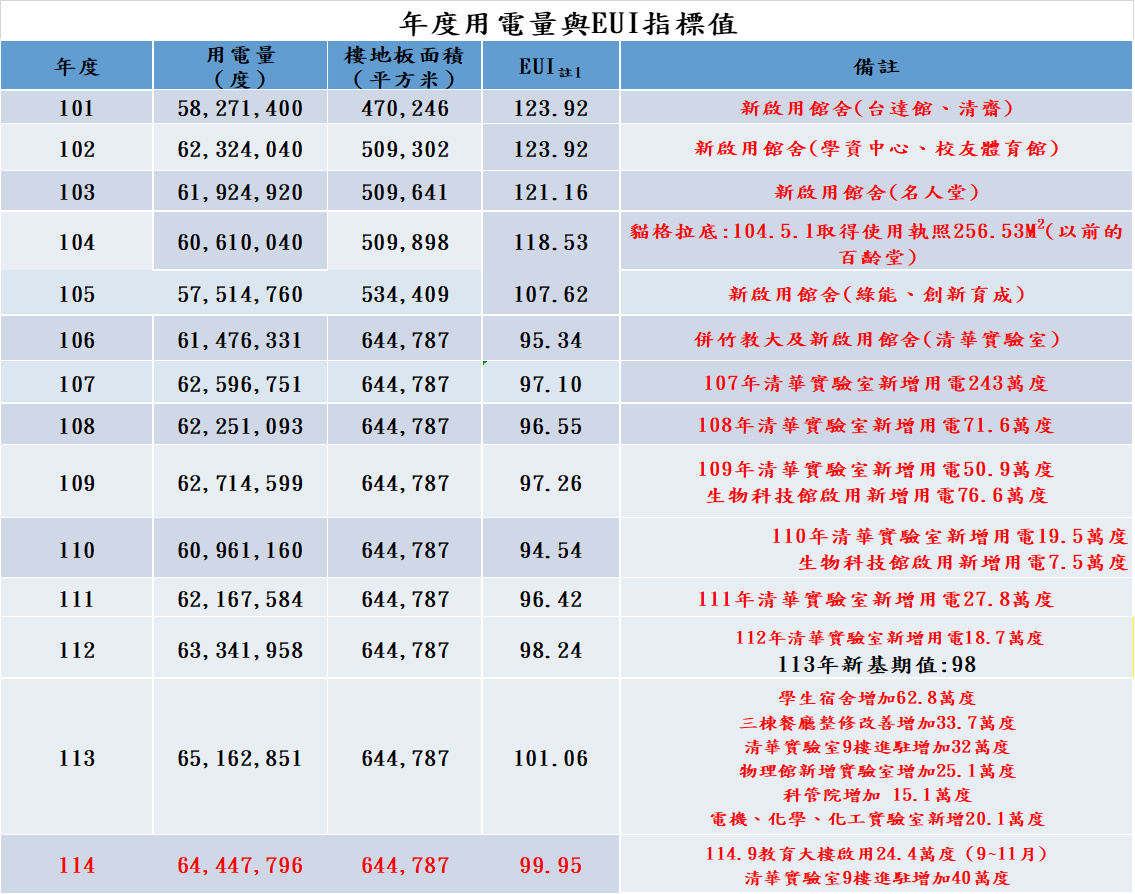
According to the university's 2025 electricity statistics, total annual electricity consumption was 64,447,796 kWh, with an EUI of 99.95 kWh/m² per year. These indicators provide a basis for evaluating energy consumption patterns and planning further efficiency improvements.
Through annual target setting, electricity allocation, performance monitoring, and continuous improvement, NTHU promotes shared responsibility for energy conservation across campus and supports its long-term goal of achieving net-zero emissions by 2050.
3.5 Energy Reviews and Identification of Potential Energy Waste
National Tsing Hua University (NTHU) regularly reviews energy consumption across campus buildings and departments through its electricity monitoring systems, electricity allocation mechanisms, and periodic energy management meetings.
These reviews help identify facilities with high energy demand, inefficient equipment, unusual consumption patterns, and opportunities to reduce energy waste.
NTHU continues installing and upgrading digital electricity meters in campus buildings. Its monitoring systems collect monthly electricity consumption and peak demand data from substations and individual facilities. Annual Energy Use Intensity (EUI) statistics provide additional information for assessing campus energy performance and planning efficiency improvements.
Academic departments receive regular electricity consumption reports and review their usage against allocated electricity quotas and annual conservation targets. The Energy Conservation Task Force generally meets twice a year to review conservation performance, management issues, and improvement needs across departments.
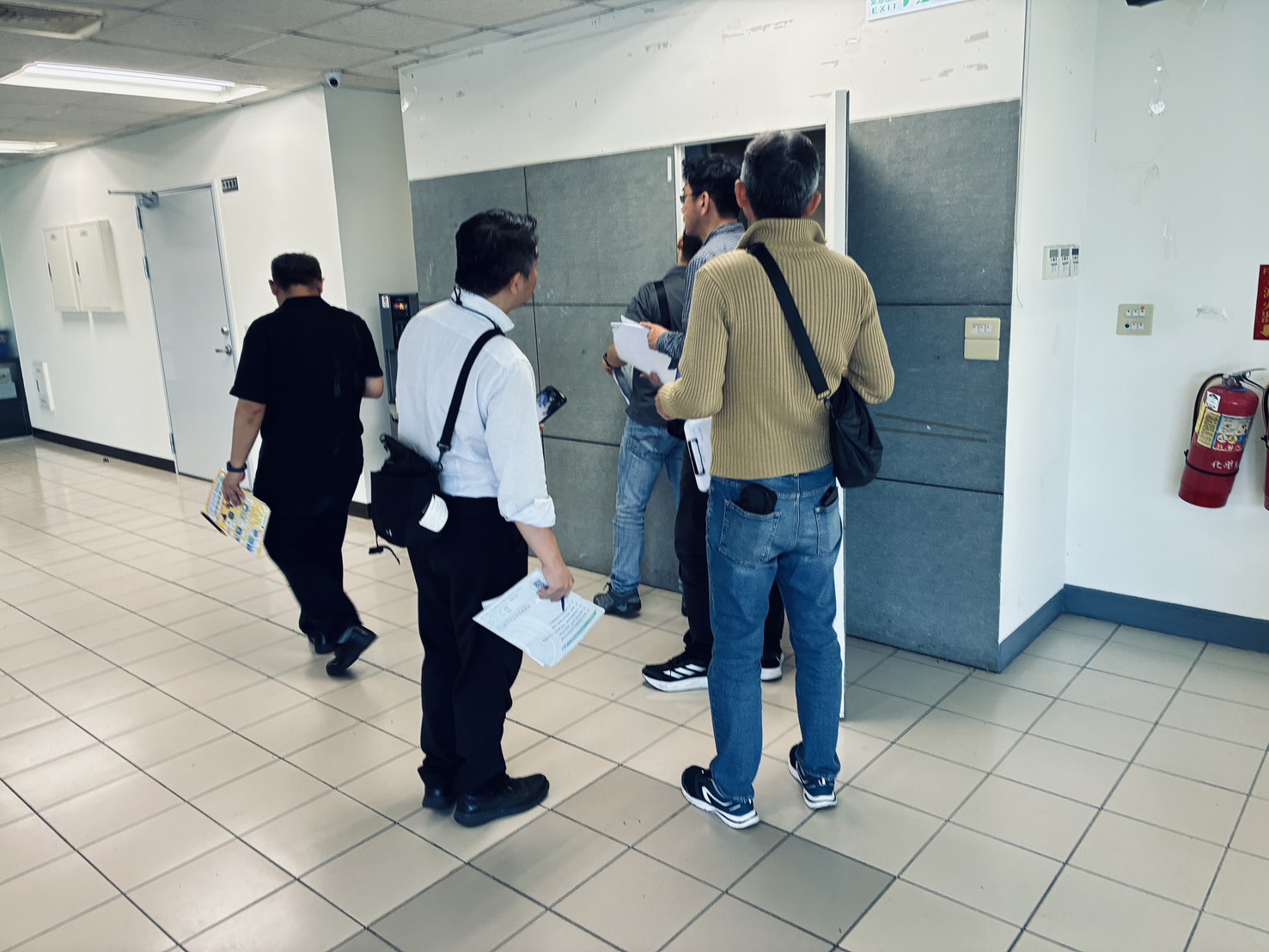
NTHU also conducts energy-saving inspections of building air-conditioning systems, including checks of filter cleanliness, maintenance records, and operating conditions. Aging HVAC systems, inefficient lighting, and other energy-intensive equipment are considered for upgrades.
Energy monitoring and equipment reviews provide a basis for identifying potential improvement priorities. For example, an HVAC upgrade at the Humanities and Social Sciences Library was completed in 2022 and achieved a third-party-verified energy-saving rate of 61.5%, equivalent to approximately 517,000 kWh annually.
Through a continuous process of energy monitoring, data review, equipment inspection, improvement implementation, and performance evaluation, NTHU works to reduce unnecessary energy consumption and improve energy efficiency across its campus facilities.
4. Major Emission Reduction Measures and Achievements
4.1 HVAC Equipment Upgrades and Maintenance
NTHU continues replacing aging air-conditioning equipment and improving maintenance practices.
Energy management measures include regular filter inspections, equipment maintenance records, and reviews of HVAC operating conditions.
An HVAC upgrade at the Humanities and Social Sciences Library was completed in 2022. Third-party verification confirmed energy savings of 61.5%, equivalent to approximately 517,000 kWh annually.
4.2 LED Lighting and Energy Performance Contracts
NTHU has implemented lighting efficiency improvements through Energy Service Company (ESCO) and Energy Savings Performance Contract (ESPC) approaches.
An indoor LED lighting replacement project conducted in 2023–2024 achieved a third-party-verified energy-saving rate of 62.39%, with estimated annual electricity savings of approximately 2.3 million kWh.
According to the university's consolidated energy conservation records, campus-wide LED and smart streetlight improvements save more than 5 million kWh annually.
4.3 Additional Building Energy-saving Technologies
NTHU has also introduced heat pumps, solar water heating systems, building insulation improvements, and regenerative elevator technologies.
These measures include improvements to dormitory hot water systems, swimming pool heat pump replacement, building insulation projects, and elevator upgrades.
Together, they reduce energy demand associated with existing building operations.
4.4 Renewable Energy Development
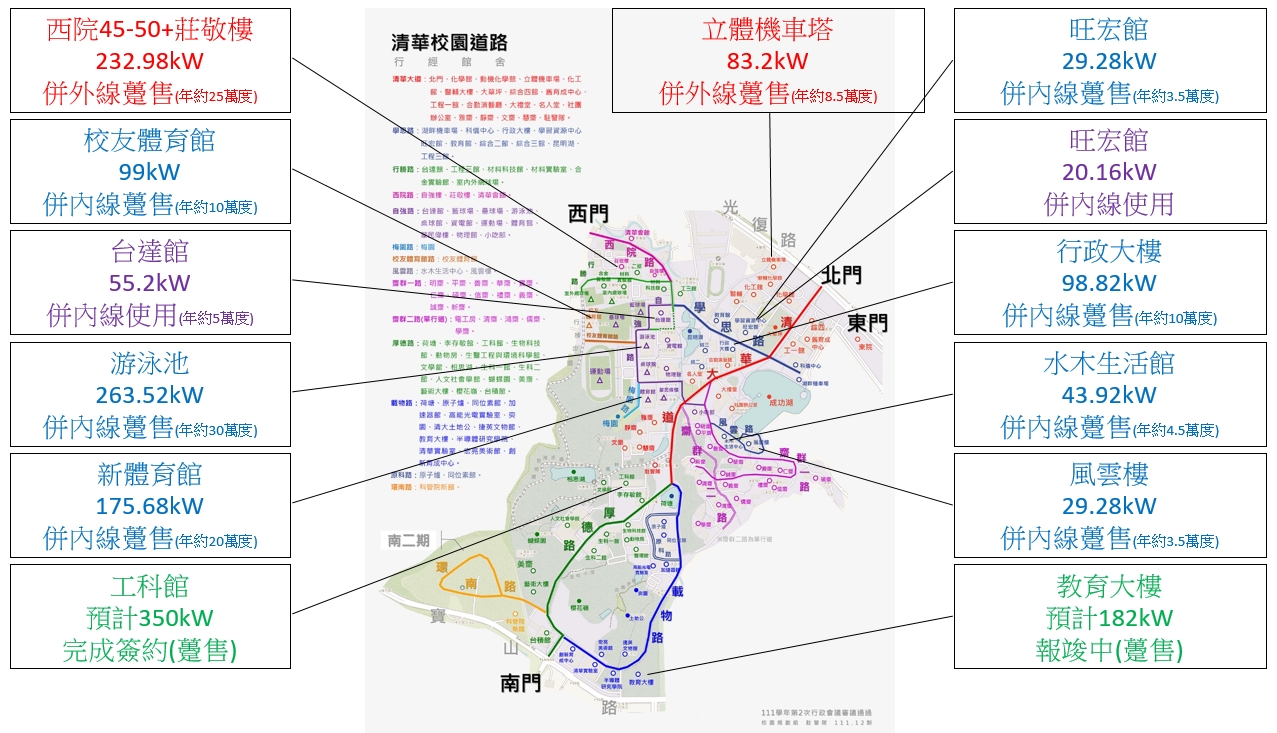
Alongside energy demand reduction, NTHU continues expanding rooftop solar photovoltaic systems.
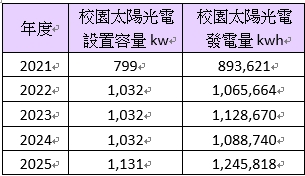
By 2025, installed solar PV capacity had reached 1,131 kW, with annual electricity generation of 1,245,818 kWh.
Renewable energy development and building efficiency improvements jointly support the university's energy transition, while addressing different aspects of energy supply and consumption.
5. Performance Review and Continuous Improvement
National Tsing Hua University (NTHU) continuously monitors campus greenhouse gas emissions, electricity consumption, and Energy Use Intensity (EUI) through annual greenhouse gas inventories, energy monitoring systems, the Energy Conservation Task Force, and departmental energy managers.
These mechanisms enable the university to evaluate progress toward annual electricity-saving targets and assess the implementation of energy conservation and carbon reduction measures.
NTHU regularly compiles departmental electricity consumption data and energy efficiency improvement outcomes. Through interdepartmental meetings, the university reviews energy use patterns, equipment performance, and improvement needs. Findings are used to inform subsequent annual energy management plans, equipment replacement priorities, and conservation strategies.
The Center for Sustainability and Resilience Development works with relevant administrative units to coordinate campus net-zero initiatives, integrate greenhouse gas emissions data, review energy efficiency measures, and consolidate carbon reduction outcomes. Key sustainability performance information is disclosed through the university's annual sustainability reports.
Looking ahead, NTHU will continue strengthening digital electricity metering and energy monitoring systems, replacing aging and inefficient equipment, improving energy performance management, and expanding renewable energy facilities.
Through annual target setting, implementation monitoring, performance evaluation, and continuous improvement, NTHU aims to enhance campus-wide energy efficiency, reduce unnecessary energy consumption, and advance its goal of achieving net-zero greenhouse gas emissions by 2050.
By 2025, the campus solar photovoltaic installation capacity will reach 1,131 kW, with an annual electricity generation expected to exceed 1 million kilowatt-hours.