
Wastewater management on campus
Sustainable Development Goals
Content
NTHU Campus Wastewater Management: Wastewater Treatment, Water Quality Standards and Pollution Prevention
THE Impact Rankings 14.4.1 — Water Discharge Guidelines and Standards
Supporting Indicators: 14.4.3, 14.5.1 and 6.3.1
Relevant Sustainable Development Goals: SDG 6 — Clean Water and Sanitation; SDG 14 — Life Below Water; SDG 12 — Responsible Consumption and Production
1. Campus Wastewater Management Policy and Objectives
National Tsing Hua University (NTHU) recognizes the importance of wastewater management and water pollution prevention in protecting surrounding aquatic environments.
In accordance with Taiwan's Water Pollution Control Act, Waste Disposal Act, and other applicable environmental regulations, NTHU implements measures for domestic wastewater collection, laboratory wastewater treatment, chemical liquid waste management, and water quality monitoring.
The university is located within a water quality protection area. Accordingly, wastewater collection, treatment, and discharge management are important components of its campus environmental protection practices.
Campus wastewater is classified into three main categories: domestic wastewater, laboratory washing wastewater, and laboratory chemical liquid waste. Each category is managed according to its characteristics, potential risks, and applicable regulatory requirements.
NTHU has also established formal laboratory wastewater management regulations, including influent quality limits, sampling procedures, and corrective measures.
Through wastewater classification, water quality standards, facility maintenance, and continuous improvement, the university seeks to reduce the risk of pollutants entering surrounding rivers and aquatic ecosystems.
Supporting Evidence:
NTHU Campus Wastewater Management
NTHU Regulations Governing Wastewater Management in Laboratory Facilities
2. Collection and Treatment of Domestic Wastewater
2.1 Sources of Domestic Wastewater
Domestic wastewater is generated through daily activities in campus buildings, including kitchens, toilets, showers, and other water-use facilities.
NTHU manages this wastewater through collection pipelines and treatment infrastructure according to the conditions and regulatory requirements of individual campuses.
2.2 Main Campus Wastewater Management
At NTHU's Main Campus, domestic wastewater from university buildings is primarily collected through shared sewer pipelines and connected to the Hsinchu City municipal sewerage system for centralized treatment.
This arrangement reduces the risk of untreated campus wastewater entering natural water bodies directly.
2.3 Nanda Campus Wastewater Management
At Nanda Campus, domestic wastewater follows a different treatment and discharge process.
According to the university's existing management records, wastewater is treated through on-campus wastewater treatment facilities before being discharged into Keya Creek.
Proper operation, maintenance, and effluent quality management at Nanda Campus are therefore particularly important for protecting the receiving water environment.
Actual discharge conditions and monitoring requirements are governed by applicable regulations and the permits or requirements approved by the relevant authorities.
Supporting Evidence:
NTHU Campus Wastewater Management — Domestic Wastewater Treatment
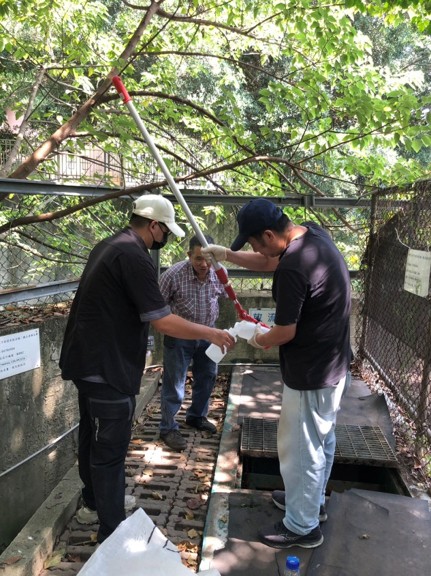
Existing University Photograph: Domestic Wastewater Treatment Facilities
https://storage.googleapis.com/nthu-sdg-files/8794e4656bb01bdb02673f27c0b70553.jpg
3. Classification and Management of Laboratory Washing Wastewater and Chemical Liquid Waste
3.1 Laboratory Washing Wastewater
Teaching and research laboratories generate wastewater through routine cleaning of experimental equipment and laboratory facilities.
NTHU operates northern and southern laboratory wastewater treatment plants to collect and treat wastewater from relevant laboratory facilities.
According to the university's existing wastewater management documentation, laboratory washing wastewater is collected through designated collection wells and conveyed to the northern and southern wastewater treatment plants.
Following treatment, wastewater is discharged into the respective campus drainage channels.
Laboratories must ensure that wastewater entering the treatment plants complies with university influent quality limits.
This system helps prevent inappropriate laboratory discharges from disrupting treatment facilities or increasing environmental risks.
3.2 Separate Collection and Treatment of Chemical Liquid Waste
Chemical liquid waste is managed separately from ordinary laboratory washing wastewater.
Chemical and biological experiments may generate liquid waste containing substances that require specialized handling.
Under the university's laboratory wastewater management regulations, chemical liquid waste must be collected in designated containers and must not be discharged into laboratory sinks or drainage systems.
Such waste is classified, stored, and collected for treatment by appropriately qualified contractors in accordance with the Waste Disposal Act and relevant university procedures.
Separating chemical liquid waste from ordinary wastewater helps prevent hazardous substances from entering wastewater treatment systems and surrounding aquatic environments.
3.3 Supporting Laboratory Waste Management Measures
According to the 2026 NTHU Sustainable Development Annual Report, the university implements complementary laboratory waste management measures, including centralized temporary waste storage, identification cards for hazardous industrial waste collection, waste chemical removal, and environmental safety training.
These measures strengthen the university's overall approach to pollution prevention and laboratory environmental management.
Supporting Evidence:
NTHU Regulations Governing Wastewater Management in Laboratory Facilities
NTHU Campus Wastewater Management — Laboratory Wastewater Treatment
2026 NTHU Sustainable Development Annual Report, section on laboratory waste management.
Existing University Photograph: Laboratory Wastewater Treatment Facilities
https://storage.googleapis.com/nthu-sdg-files/719692d366f5bcc7a133db8f88c76a37.jpg
4. Laboratory Wastewater Quality Standards
4.1 Formal Institutional Regulations
NTHU has established the Regulations Governing Wastewater Management in Laboratory Facilities to provide an institutional basis for the management, supervision, and treatment of laboratory washing wastewater.
The regulations were drafted by the Environmental Protection and Safety Committee on September 29, 2009, and amended and approved by the Administrative Council on October 13, 2009.
They require relevant laboratories, colleges, and research centers to ensure that wastewater discharged into campus wastewater treatment plants meets prescribed quality limits.
4.2 Influent Quality Limits
Under Article 7 of the regulations, wastewater entering the university's laboratory wastewater treatment plants must comply with the following limits:
Water Quality ParameterInfluent Quality LimitChemical Oxygen Demand (COD)Below 320 mg/LBiochemical Oxygen Demand (BOD)Below 90 mg/LpH6–9
These limits apply to influent entering laboratory wastewater treatment plants. They are not the statutory discharge limits for final treated effluent.
Influent quality control helps prevent abnormal wastewater discharges from interfering with treatment processes and supports the proper functioning of wastewater treatment infrastructure.
4.3 Environmental Management Significance
By establishing clear COD, BOD, and pH requirements, NTHU provides laboratories with defined internal wastewater management standards.
These standards enable laboratories and environmental management personnel to identify wastewater that does not meet treatment plant requirements and to implement corrective action when necessary.
Influent control is one element of broader water pollution prevention and must be complemented by appropriate treatment plant operations and compliance with applicable final effluent discharge requirements.
Supporting Evidence:
NTHU Regulations Governing Wastewater Management in Laboratory Facilities — Article 7
Additional recommended documentation includes actual laboratory wastewater sampling results and water quality testing reports.
5. Wastewater Treatment Plant Operations, Monitoring and Maintenance
5.1 Professional Operation and Maintenance
NTHU engages professional contractors to operate and maintain campus wastewater treatment facilities.
Routine operations and maintenance are conducted according to the characteristics and management requirements of individual facilities.
Through professional operation and university supervision, NTHU seeks to maintain proper treatment performance and reduce the risk of abnormal wastewater discharge.
5.2 Water Quality Sampling and Monitoring
Under the Regulations Governing Wastewater Management in Laboratory Facilities, the Environmental Protection and Occupational Safety and Health Center may conduct irregular and unannounced wastewater sampling and testing.
Qualified testing organizations may be commissioned when necessary.
Monitoring activities help determine whether laboratory wastewater entering treatment systems complies with the university's influent quality standards.
When abnormal discharges, exceedances, or violations are identified, corrective measures and follow-up procedures are implemented according to university regulations.
Monitoring of final treated effluent is conducted according to the applicable water pollution control requirements and discharge conditions of each campus.
5.3 Hazard Identification and Risk Assessment, 2021–2023
As part of the university's occupational health and safety management activities associated with ISO 45001, NTHU conducted hazard identification and risk assessments for wastewater treatment plant operations between 2021 and 2023.
These activities focused on identifying occupational health and safety risks associated with wastewater treatment plant operations and improving operational safety management.
The work supports the management and reliability of wastewater treatment facilities.
However, ISO 45001 is an occupational health and safety management standard. These activities should not be presented as certification of effluent water quality or evidence of quantified pollutant removal performance.
Supporting Evidence:
NTHU Campus Wastewater Management — Operations and Risk Assessment
NTHU Regulations Governing Wastewater Management in Laboratory Facilities
Recommended additional documentation includes the 2021–2023 hazard identification and risk assessment records, wastewater facility operation contracts, maintenance logs, and effluent testing reports.
6. Separation of Stormwater and Wastewater and Protection of Water Quality
NTHU is located within a water quality protection area, making wastewater collection, treatment, and discharge management important considerations for the surrounding aquatic environment.
In accordance with relevant environmental requirements and campus infrastructure conditions, the university maintains wastewater collection and treatment systems and implements stormwater and wastewater separation measures.
These arrangements help prevent domestic and laboratory wastewater from entering stormwater drainage systems improperly.
Separate drainage management also supports the appropriate operation of wastewater collection and treatment infrastructure.
The specific infrastructure and discharge arrangements depend on each campus and applicable regulatory conditions.
Through centralized wastewater treatment, drainage management, and professional maintenance, NTHU seeks to reduce the potential impacts of campus operations on surrounding rivers and aquatic environments.
Supporting Evidence:
NTHU Campus Wastewater Management
Additional recommended documentation includes campus drainage plans, water quality protection area documentation, and wastewater treatment facility layouts.
7. Management Outcomes and Continuous Improvement
NTHU implements a range of established wastewater management measures to support water pollution prevention on campus.
These measures include:
- Domestic wastewater management: Main Campus wastewater is connected to the Hsinchu City municipal sewerage system, while Nanda Campus wastewater is treated on site before discharge into Keya Creek.
- Centralized laboratory wastewater treatment: Northern and southern wastewater treatment plants collect and treat laboratory washing wastewater from relevant facilities.
- Separate chemical liquid waste management: Laboratory chemical waste is classified and collected for treatment by qualified contractors rather than discharged into campus drains.
- Defined influent quality standards: COD, BOD, and pH limits are established under formal university regulations.
- Monitoring and corrective action: Sampling, testing, and procedures for addressing abnormal discharges support wastewater management.
- Professional facility operations: Wastewater treatment facilities are operated and maintained with the assistance of professional contractors.
- Operational risk management: Hazard identification and risk assessments were carried out for wastewater treatment plant operations during 2021–2023.
- Stormwater and wastewater separation: Drainage management measures are implemented according to campus infrastructure and applicable requirements.
These outcomes demonstrate the university's implementation of wastewater management procedures. They do not, by themselves, establish quantified improvements in the water quality of specific receiving rivers.
NTHU will continue reviewing wastewater classification, treatment, monitoring, and facility operation practices in response to environmental regulations, operational requirements, and sustainable development objectives.
Through regulatory compliance, environmental management, and public information disclosure, the university seeks to minimize the risks that campus wastewater may pose to surrounding aquatic ecosystems.
Principal Supporting Evidence
1. NTHU Campus Wastewater Management
https://sdgs.nthu.edu.tw/our-response/collections/page/df1c7d2ac82248e5a6eccd33be9760f7
Documents campus-specific domestic wastewater treatment, laboratory wastewater management, contracted operations, wastewater treatment plant hazard assessments during 2021–2023, and stormwater–wastewater separation.
2. NTHU Regulations Governing Wastewater Management in Laboratory Facilities
https://law.site.nthu.edu.tw/p/450-1326-143876,c0.php?Lang=zh-tw
Provides formal requirements for laboratory wastewater management, separate chemical liquid waste collection, influent COD/BOD/pH limits, sampling, and corrective procedures.
3. 2026 NTHU Sustainable Development Annual Report
Relevant sections on campus water-resource management, waste reduction, and laboratory waste management.
4. Existing University Facility Photographs
Domestic wastewater treatment facility:
https://storage.googleapis.com/nthu-sdg-files/8794e4656bb01bdb02673f27c0b70553.jpg
Laboratory wastewater treatment facility:
https://storage.googleapis.com/nthu-sdg-files/719692d366f5bcc7a133db8f88c76a37.jpg