
Contributions to Government Policy Development for Clean Energy and Energy-efficient Technologies
Sustainable Development Goals
Content
NTHU Contributions to Government Policy Development for Clean Energy and Energy-efficient Technologies
THE Impact Rankings Indicator:
7.4.3 Energy efficiency services for industry
7.4.4 Policy Development for Clean Energy Tech
1. Overview
National Tsing Hua University (NTHU) supports the development of government policies for clean energy, energy efficiency, and low-carbon technologies through interdisciplinary research, legal expertise, and expert consultation.
Drawing on expertise in energy technology, energy law, environmental governance, and net-zero transition, NTHU faculty members contribute to policy discussions at both national and local government levels.
During 2025 and 2026, faculty members participated in government initiatives addressing renewable energy markets, energy efficiency technologies, carbon capture and storage (CCS), greenhouse gas reduction programmes, and energy-related legislation.
These contributions took the form of government workshops, advisory meetings, legislative hearings, policy consultations, and reviews of local government emission reduction plans.
2. Government Policy Contributions in 2025
2.1 Supporting Kaohsiung City Government's Carbon Credit, Energy Efficiency, and Renewable Energy Initiatives
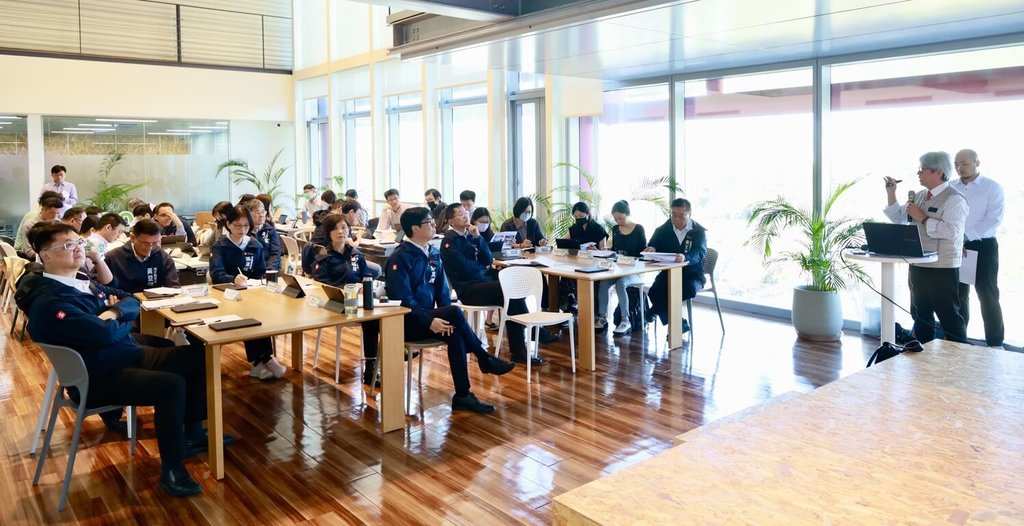
On March 25, 2025, Kaohsiung City Government's Environmental Protection Bureau organized a workshop at its Net Zero Academy to advance the city's carbon credit programmes.
Professor Chien-Te Fan of NTHU led discussions with municipal officials, including department heads and the mayor, providing professional guidance on carbon credit applications and greenhouse gas reduction strategies.
The city was implementing six carbon credit initiatives covering energy efficiency, low-carbon transportation, renewable energy, and carbon sequestration.
Relevant energy-related measures included:
- Energy Efficiency: Energy Service Company (ESCO) projects involving chiller replacements at the National Stadium and Fengshan Administrative Center, with plans to apply for verified emission reduction credits.
- Renewable Energy: A self-consumption solar photovoltaic system at the Qimei Wastewater Treatment Plant, with plans to apply for greenhouse gas emission reduction credits.
- Low-carbon Transportation: Carbon credit initiatives involving electric buses and electric vehicle charging infrastructure.
Through expert guidance and policy consultation, NTHU supported the local government's understanding of carbon management instruments, energy efficiency improvements, renewable energy projects, and carbon credit application procedures.
2.2 Consultation on Renewable Energy Market Competition and Regulation
On June 16, 2025, Professor Anton Ming-Zhi Gao of NTHU's Institute of Law for Science and Technology participated in a policy discussion on competition regulations in Taiwan's renewable energy market, organized by the Taiwan Fair Trade Commission.
The consultation addressed regulatory considerations surrounding renewable energy market operations, fair competition, and institutional arrangements supporting the energy transition.
Through research and expert consultation, Professor Gao contributed energy law and policy expertise relevant to the development of renewable energy market frameworks.
2.3 Policy Consultation on Carbon Capture and Storage
On July 28 and August 20, 2025, Professor Gao participated as an expert committee member in discussions concerning the scope of strategic environmental assessment for carbon capture and storage (CCS) site development.
These consultations addressed environmental and regulatory considerations associated with the development of CCS facilities.
NTHU's participation contributed interdisciplinary expertise in energy law, environmental governance, and emerging emission reduction technologies to government policy discussions.
2.4 Legislative Consultation on Energy Technology and Nuclear Regulation
On March 19, 2025, Taiwan's Legislative Yuan held a public hearing on proposed amendments to the Nuclear Reactor Facilities Regulation Act.
NTHU Professors Anton Ming-Zhi Gao and Tsung-Kuang Yeh participated in the policy discussions, offering perspectives on energy law, nuclear facility regulation, power plant operation, and electricity supply considerations.
Their participation contributed academic expertise to legislative deliberations concerning low-carbon energy options and energy technology regulation.
As this consultation primarily concerned nuclear regulation, it is presented as a supplementary example of NTHU's broader energy policy engagement.
3. Local Government Policy Consultation in 2026
3.1 Hsinchu City's Third-phase Greenhouse Gas Reduction Implementation Plan
On April 27, 2026, Professor Anton Ming-Zhi Gao participated in a meeting of Hsinchu City's Sustainable Development and Climate Change Response Committee concerning the city's Third-phase Greenhouse Gas Reduction Implementation Plan.
The plan covers the 2026–2030 period and addresses local greenhouse gas reduction strategies, including renewable energy development, energy efficiency, industrial decarbonization, and cross-sector climate governance.
Through participation in the policy meeting, NTHU contributed expertise in energy law and policy to discussions supporting local government climate planning.
3.2 New Taipei City's Third-phase Greenhouse Gas Reduction Implementation Plan
According to Professor Gao's energy policy and law research group's advisory consultation records, he participated in a discussion of New Taipei City's draft Third-phase Greenhouse Gas Reduction Implementation Plan on April 29, 2026.
The plan covers the 2026–2030 period and provides a framework for local emission reduction strategies and implementation measures.
This participation represents NTHU's involvement in local government policy consultation concerning energy transition, emission reduction planning, and climate governance.
3.3 Continued Collaboration with Kaohsiung City Government
NTHU's collaboration with Kaohsiung City Government on carbon credit programmes and emission reduction initiatives continued into 2026.
The government reported in January 2026 that it had worked with Professor Chien-Te Fan's team since 2024 on carbon credit applications and municipal emission reduction projects.
These initiatives involved energy efficiency improvements in public buildings, electric transportation, renewable energy, and other carbon reduction measures.
The continuing partnership illustrates how NTHU's expertise supports government efforts to develop carbon management practices and emission reduction programmes across multiple years.
4. Interdisciplinary Approaches to Government Policy Support
NTHU contributes to clean energy and low-carbon policy development through several complementary forms of engagement:
- Energy Policy and Legal Research: Providing expertise on renewable energy market regulation, electricity systems, and energy technology legislation.
- Clean Energy and Decarbonization Technology Consultation: Participating in discussions on energy efficiency improvements, carbon capture and storage, and related technology governance.
- Local Government Emission Reduction Planning: Contributing to consultations, workshops, and committee meetings concerning greenhouse gas reduction implementation plans.
- Carbon Management and Policy Instruments: Supporting discussions on carbon credit applications, emission reduction credits, and public-sector carbon management.
These activities demonstrate NTHU's contribution through academic research, expert advice, and collaboration with government agencies.
The implementation or adoption of specific policy recommendations remains subject to official government decisions and documented outcomes.
5. Continuing Commitment
National Tsing Hua University will continue leveraging its interdisciplinary expertise in energy technology, energy law, environmental science, and sustainability governance to support government policy development.
Through expert consultation, technical research, legal analysis, and cross-sector collaboration, NTHU aims to contribute to renewable energy development, energy efficiency policy, low-carbon technology governance, and greenhouse gas reduction strategies.
These efforts support Taiwan's energy transition and its long-term goal of achieving net-zero emissions by 2050.