
Watershed schools, cross-domain collaboration, freshwater ecological education, and environmental practices.
Sustainable Development Goals
Content
NTHU Watershed Schools, Cross-sector Collaboration and Freshwater Ecosystem Education: From Water Conservation to Community Learning
THE Impact Rankings 6.5.1 — Water Management Educational Opportunities
THE Impact Rankings 6.5.2 — Off-campus Water Conservation Support
THE Impact Rankings 6.5.6 — Water Conservation Educational Opportunities
Supporting Indicators: 6.5.4, 14.3.1, 14.5.3 and 14.5.4
Relevant Sustainable Development Goals: SDG 6 — Clean Water and Sanitation; SDG 4 — Quality Education; SDG 14 — Life Below Water; SDG 17 — Partnerships for the Goals
1. Learning from Watersheds: Connecting Local Communities with Water Sustainability
National Tsing Hua University (NTHU) integrates academic research, community education, and partnerships with local schools to promote water-resource management, watershed ecology, and environmental conservation.
The university seeks to make water-related environmental issues part of everyday learning and community action rather than limiting them to specialist research or classroom instruction.
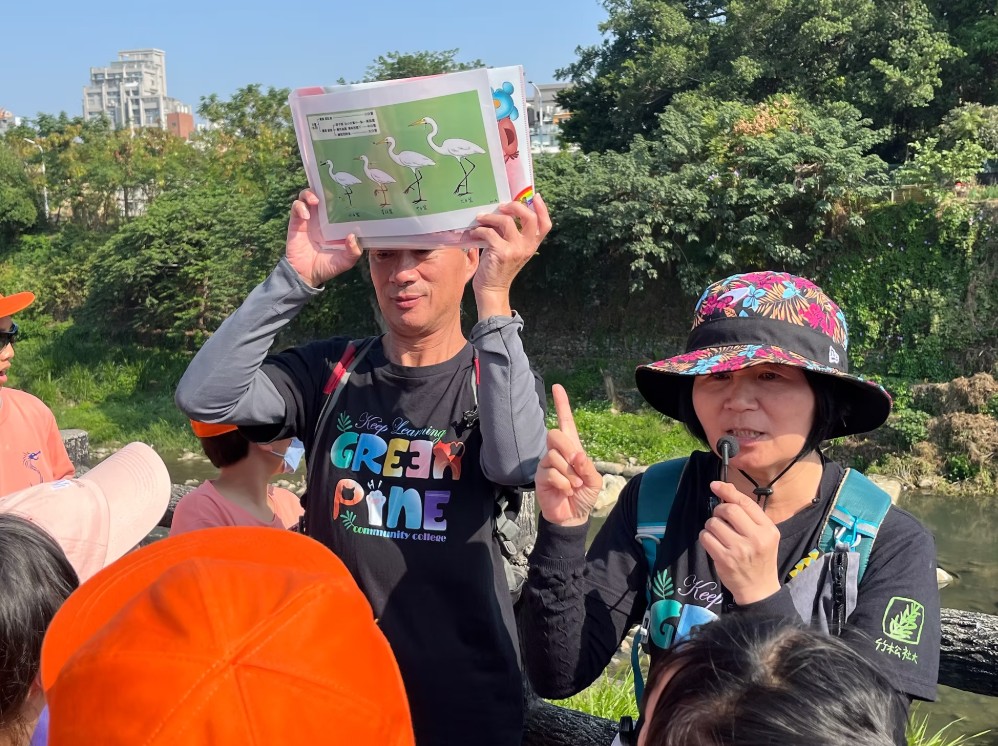
Green Pine Community University, operated by NTHU, places watershed education at the centre of its educational approach.
It regards rivers as environments connecting natural ecosystems, local industries, cultural heritage, and community life.
Through adult education, field visits, environmental observation, and collaboration with local schools, learners examine water sources, water use, and the potential impacts of human activities on aquatic ecosystems and water quality.
Watershed education emphasizes the interdependence of upstream and downstream environments. Agricultural irrigation, industrial activities, settlements, and pollution can affect water quality and resource use across an entire watershed.
NTHU also expands these educational opportunities through its University Social Responsibility (USR) project, Deep Integration of Technology and Communities: Protecting the Touqian River through Evidence-Based Research and Environmental Literacy Education.
The project connects universities, high schools, local communities, and government agencies in interdisciplinary environmental learning.
Together, these activities promote scientific inquiry, community participation, and practical understanding of water conservation and sustainable watershed management.
Supporting Evidence:
Green Pine Community University
2025 NTHU Touqian River USR Project Report
2. Watershed Exploration Courses: Understanding Water Resources through Field Learning
In 2025, Green Pine Community University offered watershed exploration and local field-learning courses, including Watershed Field Trips: Keya Creek and Dahan River and Backpacking Field Explorations.
Each course consisted of 72 instructional hours and carried four credits.
These courses used field visits and local investigations to explore stream ecology, irrigation systems, landscapes, local industries, and community life.
By visiting rivers and surrounding settlements, participants observed environmental conditions and examined how water resources support agriculture, economic activities, and everyday life.
The courses also addressed the potential impacts of water pollution, infrastructure development, and changing land use.
Courses offered in 2025:
CourseHoursCreditsWatershed Field Trips: Keya Creek and Dahan River724Backpacking Field Explorations724
Field-based learning encouraged participants to connect environmental knowledge with local experience and to develop awareness of water-resource conservation and sustainable use.
Supporting Evidence:
Green Pine Community University, 2025 course records for Watershed Field Trips: Keya Creek and Dahan River and Backpacking Field Explorations.
Green Pine Community University Official Website
Course syllabuses, schedules, and field photographs should be added to the webpage.
3. Tracing the Stream to Its Source: Water Conservation and Community Water Quality Monitoring
From February 27 to June 26, 2025, Green Pine Community University worked with Nanai Elementary School and the Nanai community on Tracing the Stream to Its Source — Water Resource Conservation in Yanshuigang.
The programme combined primary school education with community-based environmental learning and practical water quality observation.
Activities focused on Yanshuigang Creek and surrounding agricultural irrigation channels.
3.1 Stream Ecology and Environmental Observation
Participants visited local waterways to observe stream conditions, riverbanks, plants, aquatic organisms, and surrounding land use.
The activities introduced the ecological and social importance of freshwater systems, including their roles in irrigation, local livelihoods, and habitats for aquatic organisms.
Students considered how human activities and environmental changes may affect water quality.
3.2 Hands-on Water Quality Testing
The programme introduced three basic water quality indicators:
- pH: Understanding acidity and alkalinity in natural water.
- Dissolved Oxygen (DO): Examining the importance of oxygen availability for aquatic life.
- Turbidity: Observing suspended materials and water clarity as indicators of changing environmental conditions.
Through practical testing, learners developed experience in environmental measurement, data recording, and interpretation.
3.3 Pollution Awareness and Community Participation
The programme introduced ways to recognize potential pollution concerns and communicate environmental observations.
Related community activities included stream cleanup and environmental protection actions involving local school and community participants.
According to Green Pine Community University's 2025 self-evaluation records, the programme recorded 64 participant attendances.
Its documented outcomes concern environmental education, practical water quality testing, and community participation.
They do not establish that the overall water quality of Yanshuigang Creek has measurably improved.
Supporting Evidence:
Green Pine Community University, 2025 programme and self-evaluation records, Tracing the Stream to Its Source — Water Resource Conservation in Yanshuigang, February 27–June 26, 2025.
Recommended documentation includes field photographs, water quality records, educational materials, and cleanup activity records.
4. Greater Hsinchu Watershed Schools Action Alliance: One School, One Stream
Through its Touqian River USR project, NTHU extended watershed education beyond community learning into partnerships involving high schools and universities.
In 2025, NTHU developed the Greater Hsinchu Watershed Schools Action Alliance under the concept of One School, One Stream.
The alliance connected five high schools:
- Hsinchu Senior High School.
- Hsinchu Girls' Senior High School.
- National Experimental High School at Hsinchu Science Park.
- Keyuan Senior High School.
- NTHU Affiliated Senior High School.
The initiative encouraged participating schools to investigate nearby rivers and watersheds, focusing on water pollution, ecological conservation, local cultural heritage, and water-resource governance.
4.1 From Classrooms to Rivers
The alliance emphasizes inquiry-based and experiential learning related to real environmental challenges.
Students participate in interdisciplinary coursework, field investigations, water sampling, data interpretation, and community interviews.
Design thinking is incorporated through five stages: empathizing, defining problems, generating ideas, prototyping, and testing.
This approach helps students consider different stakeholder perspectives and develop potential environmental improvements or community action proposals.
4.2 Teacher Collaboration and Educational Resources
The project supports teachers through collaborative curriculum preparation, workshops, and practical field-learning activities.
Key educational achievements in 2025:
IndicatorResultPartner high schools5Teacher collaboration meetings6Teacher participant attendances25Student course attendances458Practical learning sessions15Teaching materials and lesson plans7
These achievements demonstrate how university research and environmental expertise can support continuing watershed education in secondary schools.
4.3 Environmental Literacy and Civic Participation
The alliance encourages students to examine water-related issues as both scientific and social challenges.
Through field monitoring, community exchanges, and project presentations, students learn to collect and interpret evidence, understand stakeholder perspectives, and communicate potential solutions.
The educational initiative received recognition through the 2025 Taiwan Sustainability Action Awards and NTHU's sustainability awards.
These recognitions reflect the project's educational and community engagement work.
Supporting Evidence:
2025 Touqian River USR Project Report — School Partnerships and Educational Outcomes
Greater Hsinchu Watershed Schools Action Alliance Forum, June 5, 2025.
5. Interdisciplinary University Courses: Developing Environmental Knowledge and Action Skills
In addition to community and high school education, NTHU integrates water-related environmental issues into interdisciplinary university courses and research activities.
The 2025 Touqian River USR project connected environmental science, engineering, information technology, education, and the humanities.
Relevant courses addressed water pollution, environmental health risks, monitoring technology, and community participation.
5.1 Design Thinking for Sustainable Environmental Governance
This course was jointly taught by Professor Hsiu-Chuan Chou and instructor Chun-Ming Chen.
Using the Touqian River watershed as a practical learning environment, students examined the relationships among environmental science, community participation, and governance.
The course combined lectures, field visits, expert discussions, data collection, and group projects.
Students visited locations such as Jiugang Island and Zhudong irrigation waterways to better understand relationships among river environments, local communities, and public decision-making.
5.2 Special Topics in Contemporary Environmental Medicine I
This course introduced relationships among environmental pollution, human health, emerging contaminants, and toxicological risk assessment.
Students examined how environmental exposure may affect public health and considered the importance of pollution prevention.
5.3 Special Topics in Environmental Science and Engineering
This course emphasized water quality monitoring, sediment analysis, and pollution-source identification.
Students conducted research-based investigations involving environmental samples and monitoring data.
According to the 2025 USR project report, these three representative courses enrolled 17, 6, and 10 students, respectively. The environmental medicine course also recorded seven additional auditing students.
Together, the courses connect university teaching with practical research and watershed environmental challenges.
Supporting Evidence:
2025 Touqian River USR Project Report — Curriculum Development and Teaching Outcomes
6. Community Engagement and Wider Educational Impact
NTHU's watershed education initiatives extend beyond enrolled university students to include local residents, volunteers, and community organizations.
According to the 2025 Touqian River USR project report, the project recorded 327 participant attendances among local residents, volunteers, and community members.
Activities included river field visits, community forums, citizen monitoring, environmental observations, and local exchanges.
The project also collaborated with five government, public-sector, or nongovernmental partner organizations.
Through these partnerships, scientific research findings were connected with residents' local observations and environmental concerns.
Participants gained opportunities to understand water quality monitoring, discuss pollution risks, and engage with broader water security issues.
The figure of 327 refers to attendances across activities and should not be interpreted as 327 unique participants.
Supporting Evidence:
2025 Touqian River USR Project Report — Community Participation and Partnerships
7. Bringing University Research into Local Schools: Water Pollution and Emerging Contaminant Education
NTHU also shares environmental research knowledge through outreach activities at local schools.
In May 2026, a faculty member from NTHU's College of Nuclear Science delivered an environmental education lecture at Ching Cheng High School in Changhua County.
The lecture focused on Water Pollution and Emerging Contaminants.
It introduced major sources of water pollution, pathways through which pollutants enter aquatic environments, and the potential effects of changing water quality on public health and ecosystems.
Students also learned about emerging contaminants, including pharmaceuticals, personal care products, and other substances that may occur in aquatic environments.
The session introduced the importance of contaminant monitoring, pollution control, and advanced water treatment technologies.
By connecting environmental research with everyday consumption and product use, the lecture helped students consider individual responsibilities for pollution prevention and water-resource conservation.
This event demonstrates how university research can be translated into accessible environmental education for secondary school students.
Supporting Evidence:
NTHU College of Nuclear Science, environmental education lecture at Ching Cheng High School, May 2026.
The exact date, lecturer, school announcement, presentation materials, and event photographs should be added.
Note: This is a 2026 outreach activity and is not included in the project's 2025 activity totals.
8. Daping Creek Cleanup in Beipu: Community Participation and Drinking Water Source Protection
Faculty and students associated with NTHU's sustainability and resilience research units participated in a Daping Creek Cleanup organized by the Beipu Township Office in Hsinchu County.
They joined Beipu Junior High School students, community residents, and civil society organizations in a local river conservation activity.
Daping Creek is an important source of water for drinking and agricultural irrigation in the Beipu area.
It also supports local ecosystems and recreational activities.
According to the activity news report, more than 200 participants took part in the cleanup, removing approximately 250 kilograms of general waste and 50 kilograms of recyclable materials.
The event connected local government, schools, university participants, and residents in practical environmental protection.
It also provided opportunities to raise public awareness of drinking water source protection, litter prevention, and responsible environmental practices.
The recorded waste removal figures describe cleanup outputs and should not be interpreted as proof of measurable improvements in river water quality.
Supporting Evidence:
Liberty Times — Daping Creek Cleanup in Beipu
The exact event date and participant information should be confirmed against the original news report before final publication.
9. Fengshan River Watershed Learning Forum: Citizen Participation and Water Security
NTHU researchers participated with local environmental organizations in a Fengshan River Watershed Learning Forum.
The forum connected research findings, public discussion, and cross-sectoral exchanges concerning river pollution, water-source protection, drinking water safety, and environmental governance.
University researchers shared environmental investigation findings and helped participants understand challenges facing the watershed.
The discussions also explored potential approaches to drinking water source protection and local environmental management.
This activity illustrates how university research can support community learning and public dialogue about water security.
Discussions concerning water source protection areas and governance arrangements should not be interpreted as confirmation that any proposed protection area has already completed its statutory designation process.
Supporting Evidence:
Hakka TV — Fengshan River Watershed Learning Forum
10. Touqian River Field Visits and Community Watershed Education
In 2025, NTHU's Touqian River research team organized field visits involving Zhudong irrigation waterways, the Zhongxing river channel, and estuary environments.
These activities connected water environment research with local history, community interviews, and ecological observation.
The team developed interpretation materials based on watershed investigations, historical records, and residents' experiences.
Students and community members explored how rivers, irrigation systems, settlements, and local industries are interconnected.
The activities also included a September 2025 estuary field visit involving areas near Nanliao Fishing Port and Jiugang Island.
Through observation of estuary organisms and river environments, participants examined how upstream activities may influence downstream coastal ecosystems.
These field-learning activities supported local knowledge sharing, environmental awareness, and the development of reusable educational resources.
Supporting Evidence:
2025 Touqian River Research and Community Engagement Project Report
2025 Touqian River Education and Estuary Field Visit Records
11. Continuing Commitment to Water Education and Conservation
Through Green Pine Community University, local school partnerships, the Watershed Schools Action Alliance, university courses, and community environmental activities, NTHU has developed a multi-level approach to watershed education.
The university's initiatives contribute to three interconnected areas:
Water management education: Providing opportunities to learn about water quality monitoring, pollution sources, irrigation, environmental risk, and sustainable resource management.
Off-campus water conservation support: Working with communities and schools through water quality testing, stream cleanup, watershed field visits, and environmental education.
Public education on water conservation: Sharing knowledge with residents, school students, and community groups to encourage water protection, responsible resource use, and pollution prevention.
The documented 2025 educational achievements demonstrate sustained engagement in watershed learning and community partnerships.
Additional activities in 2026 show how related environmental education and public participation have continued beyond the original project period.
The university does not equate educational attendance figures, numbers of courses, or quantities of collected litter with verified water savings or improvements in water quality.