
Community Education on Sustainable Fisheries, Responsible Fishing, and Marine Food Culture
Sustainable Development Goals
Content
National Tsing Hua University Sustainable Fisheries, Responsible Fishing and Marine Food Culture Education
THE Impact Rankings 14.2.2 — Sustainable Fisheries (Community Outreach)
THE Impact Rankings 14.2.3 — Overfishing (Community Outreach)
Supporting Indicator: 14.3.1 — Conservation and Sustainable Utilisation of the Oceans (Events)
Relevant Sustainable Development Goals: SDG 14 — Life Below Water; SDG 4 — Quality Education; SDG 12 — Responsible Consumption and Production; SDG 17 — Partnerships for the Goals
1. Educational Commitment: Connecting Sustainable Fisheries, Local Culture and Community Learning
National Tsing Hua University (NTHU) promotes sustainable fisheries education through food and agriculture education programmes, community universities, and partnerships with local schools and organizations.
These initiatives integrate traditional fishing knowledge, oyster farming, marine ecology, and sustainable seafood consumption to increase public understanding of the responsible use of aquatic resources.
Activities are primarily based in the coastal communities of Nanliao and Xiangshan in Hsinchu.
By working with local fishers, oyster farmers, community educators, schools, fishermen's associations, and marine-related organizations, NTHU supports educational activities including field visits, interviews, hands-on workshops, water quality observations, teacher training, and curriculum development.
The university's work addresses three complementary areas:
- Traditional fishing culture and ecological knowledge: Documenting the traditional eel-catching technique known as Die Man Dun and exploring connections between fish behaviour, local environments, and fishing practices.
- Oyster farming and wetland sustainability: Using the Oyster Learning Park programme to examine relationships among aquaculture, intertidal ecosystems, environmental conditions, and local livelihoods.
- Responsible fishing and marine food education: Introducing the Mingfa set-net fishery and seafood education to explore fishing methods, selectivity, overfishing risks, and marine resource conservation.
These programmes connect local cultural heritage with contemporary discussions of marine sustainability and environmental responsibility.
2. Traditional Eel-catching in Hsinchu: Fishing Heritage and Ecological Education
2.1 Preserving Local Fishing Knowledge
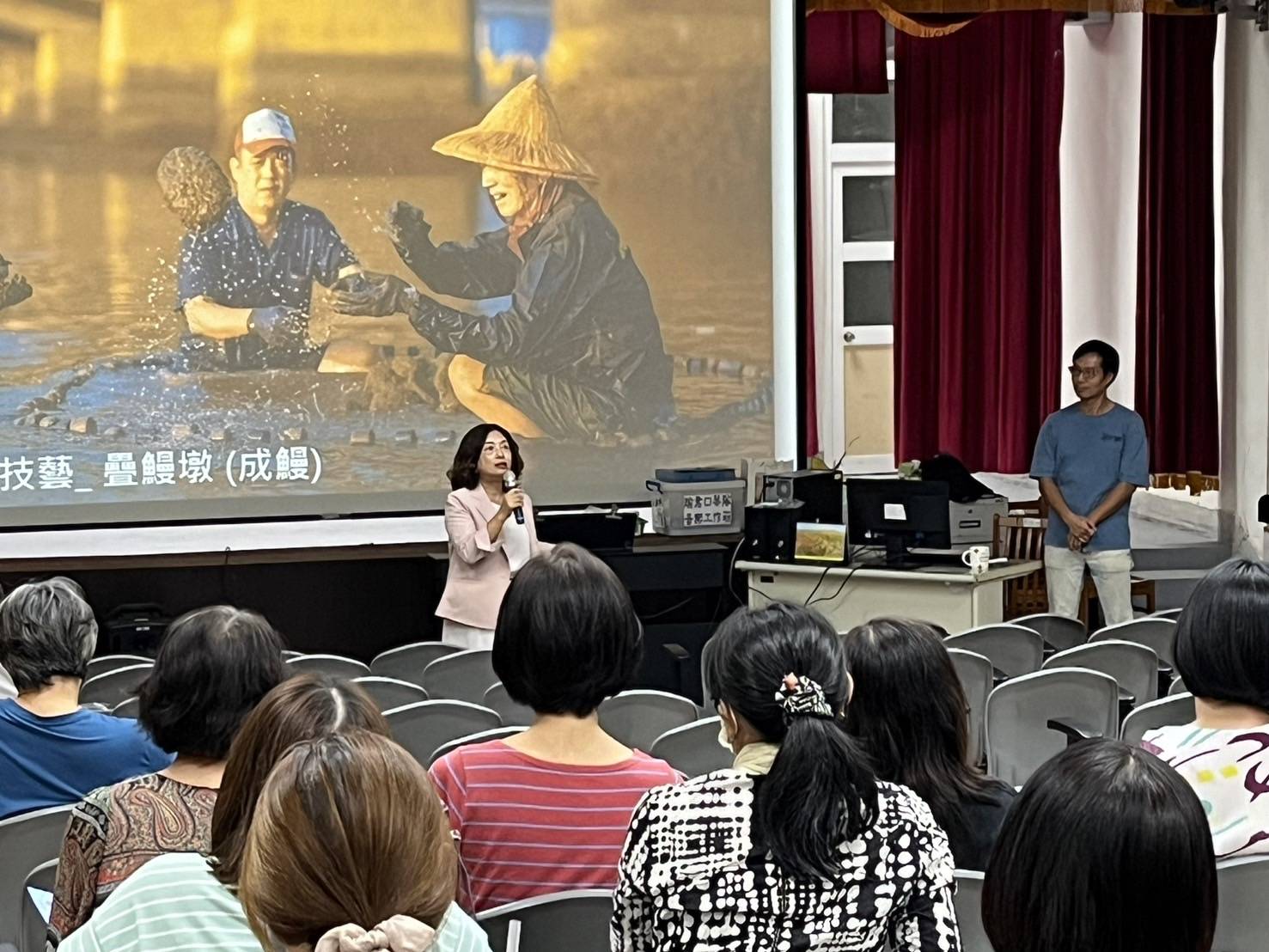
Die Man Dun (疊鰻墩) is a traditional eel-catching technique associated with coastal communities in Hsinchu.
The practice involves constructing fishing structures based on observations of eel behaviour and habitat characteristics, reflecting ecological knowledge accumulated by local fishers.
As traditional livelihoods and fishing practices change, this technique faces the risk of being lost.
Through years of field documentation, Zhuqian Community University has worked with experienced fishers from Nanliao to record and demonstrate the technique.
The practice has been transformed into educational activities combining cultural preservation, environmental learning, and practical experience.
Participants learn not only about traditional fishing methods but also about relationships among coastal environments, fish migration, habitat conditions, and community knowledge.
2.2 Immersive Learning and Traditional Fishing Structure Construction
Zhuqian Community University organized a summer experiential programme for students in an experimental education learning group.
The programme combined immersive games, problem-solving activities, teamwork, and hands-on construction of traditional eel-catching structures.
Experienced local fishers introduced the principles of the structures and explained eel migration and habitat behaviour.
Through simulated tasks and group activities, students explored how traditional fishing practices rely on ecological observation.
The programme also encouraged reflection on fishing activities and their relationship with environmental protection.
2.3 Teacher Workshops and Local Curriculum Development
Educational activities related to Die Man Dun were extended to local school teacher development.
Dazhuang Elementary School invited instructors from Zhuqian Community University to share traditional fishing knowledge and cultural heritage.
Nanliao Elementary School also collaborated with the community university on an October 9 teacher workshop attended by more than 60 educators.
Instructor Wang Zhiren introduced traditional eel-catching methods through presentations, documentary videos, and demonstrations.
The workshop discussed the life cycle of eels, including reproduction in the Mariana region and oceanic migration, while connecting scientific understanding with Hsinchu's coastal fishing heritage.
Teacher training and curriculum development helped transform traditional fishing practices into resources for marine ecology, environmental education, and local cultural studies.
2.4 Connecting Traditional Fishing with Resource Conservation
Preserving a traditional fishing practice does not automatically establish that it is environmentally sustainable under all conditions.
The educational value of the programme lies in helping participants examine fish life cycles, habitats, fishing methods, and the importance of appropriate resource management.
By involving local fishers and educators, the programme supports cultural preservation while encouraging public understanding of responsible fishing.
Supporting Evidence:
Zhuqian Community University, Die Man Dun traditional eel-catching documentation, student experiential activities, and teacher workshops.
Additional records should confirm the specific event years and provide field photographs, teaching materials, and workshop documentation.
Relevant Indicators: 14.2.2, 14.2.3 and 14.3.1.
3. Oyster Learning Park in 2025: Oyster Farming and Xiangshan Wetland Education
3.1 Exploring Aquaculture and Coastal Ecology
In 2025, Green Pine Community University, operated by NTHU, implemented its Oyster Learning Park programme in Xiangshan.
The initiative connected oyster farming, coastal wetland ecology, local communities, and environmental education.
Teachers, learners, oyster farmers, and community partners participated in interviews, documentation of aquaculture activities, wetland field visits, water quality testing, and the development of educational materials.
The programme explored relationships among oyster farming, water quality, intertidal ecosystems, local livelihoods, and environmental change.
It also addressed concerns relating to coastal pollution, changes in farming conditions, the decline of traditional industries, and the preservation of local cultural knowledge.
3.2 Major Educational and Community Activities in 2025
Oyster Discovery Tour — Watershed Edition, April 16, 2025
This programme explored connections among Keya Creek, wastewater treatment, coastal environments, and oyster farming.
Participants considered how land-based activities and water pollution could affect downstream environments and aquaculture conditions.
A Year of Documenting the Oyster Farming Industry, April 21–September 30, 2025
Teachers, learners, and community partners documented oyster farming practices through interviews, field observations, and records of local production experiences.
Major field documentation dates included April 21, June 30, August 25, and September 8.
The programme involved local partners including the Meishan community and the Lin family's oyster farming business.
Its outputs supported educational resource development and the preservation of local aquaculture knowledge.
In Search of Oysters, May–July 2025
Activities were conducted on May 15, May 22, June 5, June 12, and during July 7–28.
The programme combined wetland observations, community interviews, field research, and collaborative learning activities.
A water quality testing session on June 5, titled From the Discharge Outlet to the Ocean, introduced participants to relationships between water pollution and coastal ecosystems.
Community-based training also developed participants' abilities to investigate and document environmental issues.
3.3 Connecting Industry, Ecology and Cultural Heritage
Oyster Learning Park places importance on the relationship between aquaculture practices and the ecological conditions of coastal wetlands.
Through interviews with oyster farmers, participants learn about traditional knowledge, local production methods, and the experiences of coastal communities.
Wetland observations and water quality testing provide opportunities to discuss pollution, habitat changes, and the environmental conditions required for aquaculture.
The documented outcomes in 2025 primarily concern community education, local industry documentation, ecological observation, and teaching resources.
They do not independently establish that oyster farms have obtained sustainability certification or achieved verified reductions in pollution.
Supporting Evidence:
Green Pine Community University, Oyster Learning Park programme records, 2025.
Green Pine Community University — Oyster Farming Field Activity Announcement
Related NTHU evidence webpage: Xiangshan Wetland Oyster Learning Park: Marine Ecology, Oyster Farming and Community Conservation.
Relevant Indicators: 14.2.2 and 14.3.1, with additional relevance to 14.5.4.
4. Marine Food Culture Education, 2024–2025: Responsible Fishing and Seafood Literacy
4.1 NTHU's Food and Agricultural Education Demonstration Programme
National Tsing Hua University implemented the 2024–2025 Food and Agricultural Education Demonstration Schools and Regional Support Network Programme, commissioned by the K–12 Education Administration of Taiwan's Ministry of Education.
Marine food culture was incorporated into the programme's educational activities to connect local fisheries with marine environmental education and sustainable resource use.
NTHU's food and agriculture education team worked with government agencies, schools, fisheries-related organizations, the Hsinchu District Fishermen's Association, and local fishing businesses.
The programme engaged Mingfa Set-Net Fishery as a local industry case for course development, helping connect fishing practices, cultural knowledge, and marine education.
4.2 Mingfa Set-Net Fishery: Fishing Methods and Sustainability
Mingfa Set-Net Fishery, located along the northern section of Taiwan's western coast, was introduced as a practical case for examining set-net fishing.
Set-net fishing is a passive fishing method that uses installed nets and fish movement patterns to guide fish into capture areas.
Net design, mesh size, placement, and fishing operations can influence the species and sizes of fish caught.
The educational programme introduced net structures, fishing procedures, fish ecology, and catch selectivity.
Participants examined how different fishing practices may affect marine environments and fishery resources.
Compared with some mobile fishing methods, set-net fisheries use a different operational approach. Nevertheless, their environmental impacts still depend on factors such as location, fishing intensity, species composition, and bycatch.
The programme therefore treats the fishery as an educational case rather than claiming that all set-net operations have no environmental impacts or possess independent sustainability certification.
4.3 From Ocean to Table: Seafood Education and Teacher Training
NTHU's food and agriculture education team developed marine food culture courses and professional development activities for school educators.
The curriculum introduced the journey of seafood from fishing and processing to distribution and consumption.
It combined marine ecology, fishing techniques, seafood culture, and responsible resource use.
Educational activities included fish observation, scaling, gutting, removing gills, handling methods, and tasting seasonal seafood.
Through practical and sensory learning, teachers explored how to turn marine sustainability concepts into engaging educational experiences.
The programme supported the development of locally relevant teaching materials that could be incorporated into school curricula.
4.4 Local Fishing Knowledge and Cultural History
The programme invited Chia-Mei Hung to explore the historical development of seafood culture in Taiwan.
Her teaching examined changes in traditional fishing, aquaculture, preservation, distribution, and dietary practices, and their connections with local history.
Local seafood educator and chef David Huang (Huang Chung-Hsien) contributed practical knowledge of Hsinchu fisheries, including Mingfa's set-net operations, seafood selection, processing, and seasonal fish flavours.
The combination of historical perspectives and practical expertise helped participants understand how fisheries, cultural traditions, food systems, and marine ecosystems are interconnected.
4.5 Overfishing Awareness and Responsible Seafood Consumption
The marine food culture programme encourages teachers and learners to consider the environmental implications of seafood sourcing and consumption.
Using set-net fisheries as a practical case, the curriculum provides opportunities to discuss different fishing methods, catch selectivity, the potential impacts of overfishing, and the importance of resource management.
Learning activities can also be linked to sustainable seafood guides, fishing restrictions, protected species, and responsible seafood purchasing.
Through teacher training and curriculum development, NTHU seeks to extend marine sustainability education beyond university activities and into schools and local communities.
The programme's documented outcomes concern education, curriculum development, and public awareness.
They do not constitute a formal stock assessment or independent sustainability certification of a fishing business.
Supporting Evidence:
NTHU Marine Food Culture — Official Sustainability Webpage
NTHU Greater Hsinchu Regional Food and Agriculture Education Support System
Ministry of Education, K–12 Education Administration, 2024–2025 Food and Agricultural Education Demonstration Schools and Regional Support Network Programme.
Relevant Indicators: 14.2.2, 14.2.3 and 14.3.1.
5. Community Outreach and Interdisciplinary Partnerships
5.1 Connecting Universities, Communities, Schools and Fisheries
Through its food and agriculture education programmes and community partnerships, NTHU connects fishers, oyster farmers, community universities, teachers, schools, and marine-related organizations.
Traditional eel-catching education draws on the experience of local fishers and community educators.
Oyster Learning Park brings together oyster farmers, community residents, and learners to document aquaculture activities and environmental conditions.
Marine food culture education connects Mingfa Set-Net Fishery, professional educators, and school teachers to transform industry experience into educational resources.
These collaborations create opportunities for knowledge exchange across generations, institutions, and professional backgrounds.
5.2 Three Complementary Educational Approaches
The university's outreach work combines:
- Traditional eel-catching: Preserving fishing heritage and exploring relationships among fish ecology, habitats, and traditional methods.
- Oyster Learning Park: Examining aquaculture conditions, water quality, coastal wetland ecosystems, and local livelihoods.
- Marine Food Culture: Promoting awareness of fishing methods, seafood sourcing, overfishing risks, and responsible consumption.
Together, these activities provide diverse ways for communities and learners to understand fisheries sustainability.
5.3 Extending Outreach through Teacher Professional Development
The programmes use field investigations, fishing demonstrations, interviews, wetland observations, hands-on food preparation, teaching workshops, and curriculum development.
Teacher professional development is particularly important because it creates opportunities for educational materials to be reused in schools.
While existing records demonstrate programme activities and partnerships, additional attendance records, learning assessments, and teaching implementation reports would help evaluate longer-term educational outcomes.
Supporting Evidence:
Green Pine Community University
6. Continuing Commitment to Fisheries Sustainability Education
NTHU continues promoting sustainable fisheries knowledge through food and agriculture education, community universities, and partnerships with local schools and industry practitioners.
By drawing on traditional eel-catching in Hsinchu, oyster farming in Xiangshan, and the Mingfa set-net fishery, the university connects fisheries heritage and marine food culture with contemporary discussions of aquatic resource conservation.
Future educational activities can further strengthen public awareness of overfishing, responsible aquaculture, protected species, seafood traceability, and sustainable seafood choices.
Through collaboration with fishers, coastal communities, educators, and local organizations, NTHU seeks to support long-term learning and public engagement in the sustainable use of aquatic resources.
Principal Supporting Evidence
1. NTHU Marine Food Culture
https://sdgs.nthu.edu.tw/key-issues/page/23e3e5b34bff4705baf559182da8d456
Official evidence covering seafood culture, Mingfa Set-Net Fishery, seasonal fish tasting, practical learning, and teacher education led by Chia-Mei Hung and David Huang.
2. NTHU Greater Hsinchu Food and Agriculture Education Support System
https://sdgs.nthu.edu.tw/our-response/collections/page/1f2aefb25dac4e178ebd03895ac3654f
Documents the university's broader food education networks and cross-sectoral partnerships.
3. Green Pine Community University — Oyster Learning Park
https://greenpine.proj.nthu.edu.tw/
Official community university website documenting educational activities and community partnerships.