
Sustainable Development Goals

Abstract/Objectives

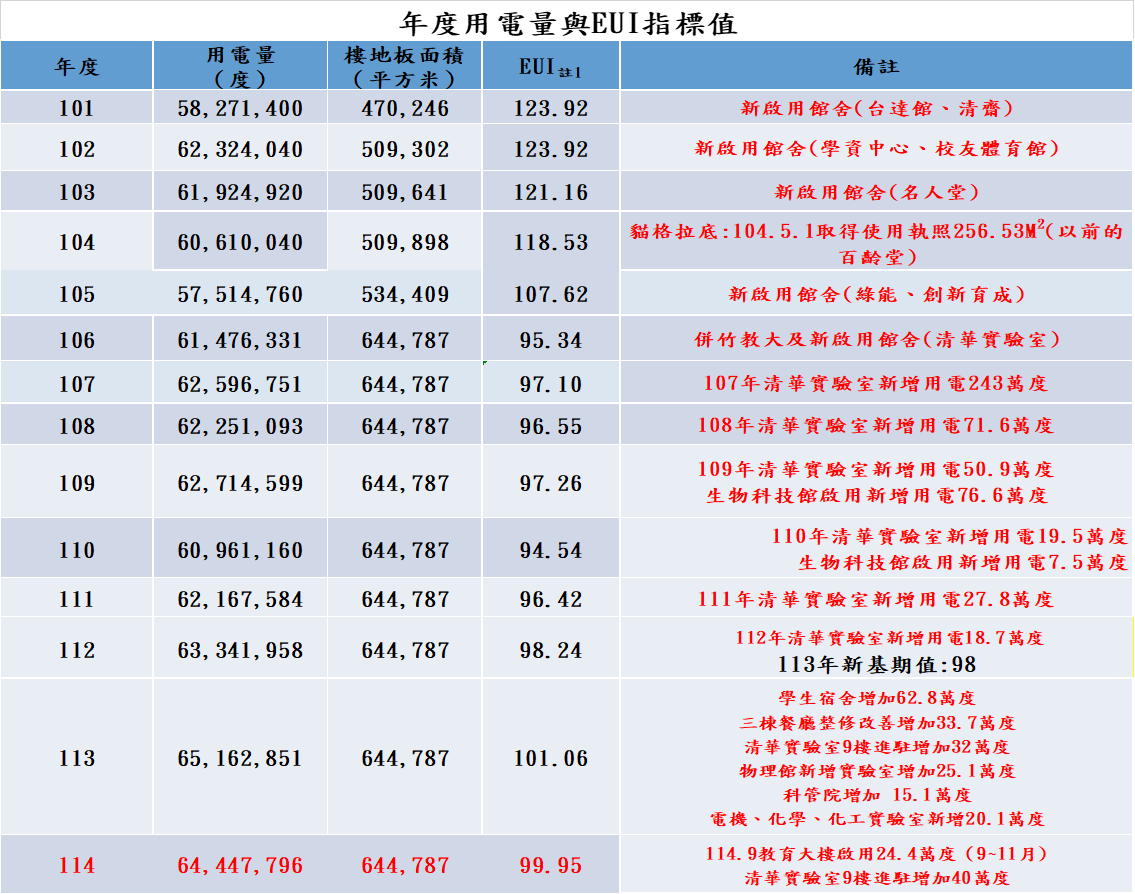
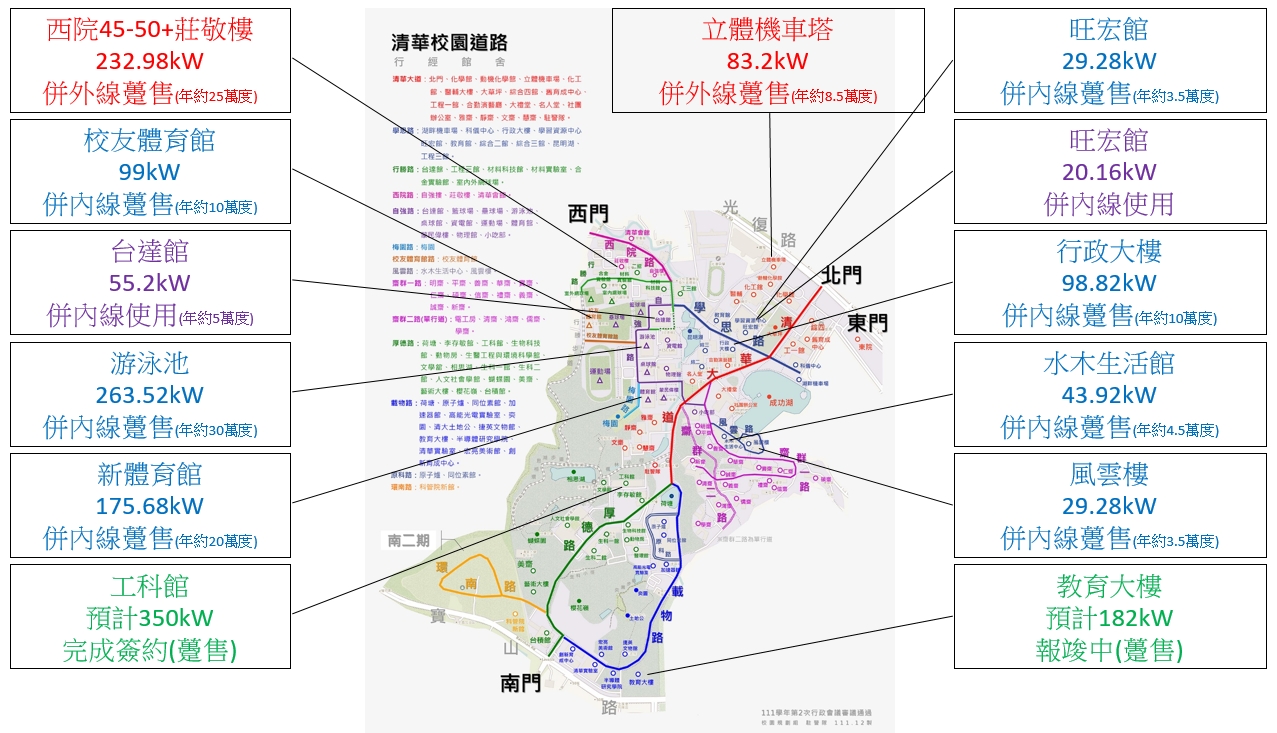
1. In accordance with the government's electricity efficiency management plan for public institutions and schools, we will review the annual electricity consumption and EUI (Energy Use Intensity) of NTHU. While promoting the development of various school affairs, we will continue to implement measures such as replacing old lighting fixtures, air conditioning systems, and equipment, monitoring and managing energy usage, and promoting energy-saving and carbon reduction actions. These efforts aim to enhance the overall electricity efficiency on campus and reduce the energy costs associated with various operations. 2. An Energy Conservation Promotion Task Force has been established, with each unit designating an energy manager. Meetings will be held every six months to coordinate energy-saving efforts across units, review the implementation measures, effectiveness, and achievement of goals related to energy conservation, and compile relevant data and outcomes. Meeting records will be uploaded to the energy conservation reporting website. 3. To promote sustainable development on campus and enhance the energy efficiency of buildings, we will continue to push forward the installation of solar photovoltaic systems on the roofs of campus facilities.

Results/Contributions

1. Following NTHU environmental protection and occupational safety and health management policies, we will continue to promote various sustainable development programs on campus. This includes initiatives for campus biodiversity, responsible dining service consumption, green procurement, energy saving and carbon reduction, as well as resource recycling and reuse, all aimed at creating a green campus.

2. In accordance with the government's electricity efficiency management plan for public institutions and schools, we will review our school's annual electricity consumption and EUI (Energy Use Intensity). While various school affairs thrive, we will continue to implement measures such as replacing old lighting fixtures, air conditioning systems, and equipment, monitoring and managing energy usage, and promoting energy-saving and carbon reduction initiatives. These efforts aim to enhance overall electricity efficiency on campus and reduce energy costs associated with various operations.
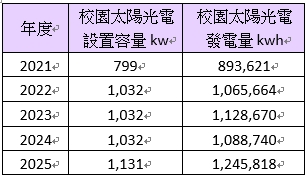
3. By 2025, the campus solar photovoltaic installation capacity will reach 1,131 kW, with an annual electricity generation expected to exceed 1 million kilowatt-hours.
Keywords

Energy ConservationEnergy Saving and Carbon ReductionSustainable DevelopmentSolar Energy

References

1. https://nesh.site.nthu.edu.tw/p/405-1009-217810,c18963.php?Lang=en

National Tsing Hua University Environmental Protection and Occupational Safety and Health Management Policy

3. https://sdgs.nthu.edu.tw/our-response/collections/page/3674425623854bbfb57338444b4b3798

Electricity allocation for various departments and units at NTHU in 2025

4. https://sdgs.nthu.edu.tw/our-response/collections/page/29c41da2a89144699367b8cafe600e66

2025 Improve campus air conditioning and replace it with high-efficiency or variable frequency air-conditioning

5. https://sdgs.nthu.edu.tw/our-response/collections/page/a64cb7d5cf874420a78faaa865b4dbd3

2025 Campus green energy-construction of Solar Photovoltaic System

6. https://sdgs.nthu.edu.tw/our-response/collections/page/df7b28a936224beea989d07a3a99b12b

2025 Power supervisory and energy conservation system maintenance plan

7. https://sdgs.nthu.edu.tw/our-response/collections/page/bbe8a798860345feafd9468d5cce2fdf

2025 Energy-saving management for air conditioner of campus buildings

Contact Information

吳瑞祥
jhwu@mx.nthu.edu.tw